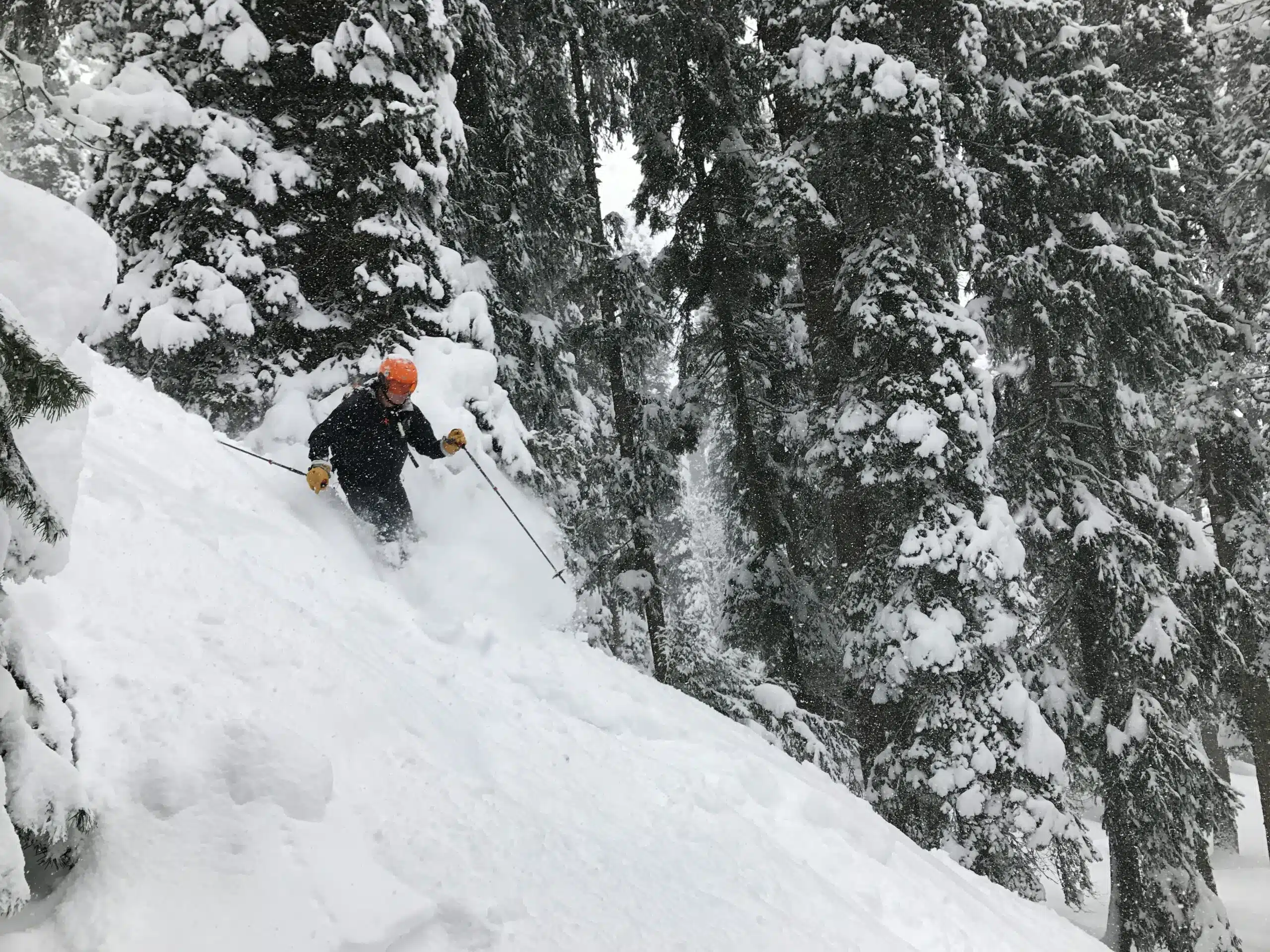
Hampta Pass Trek
Trek Difficulty
Moderate-Difficult
Trek Duration
5 days
Highest Altitude
14,100 ft
Suitable For
12-62 years
Hampta Pass Trek – Complete Guide, Itinerary, Difficulty & Cost
The Hampta Pass Trek is one of the most dramatic crossover treks in Himachal Pradesh, connecting the lush green Kullu Valley with the cold desert landscapes of Lahaul. Located in the Pir Panjal range of the Himalayas, the trek reaches a maximum altitude of 14,107 feet, offering trekkers a rare contrast of scenery within a short duration.
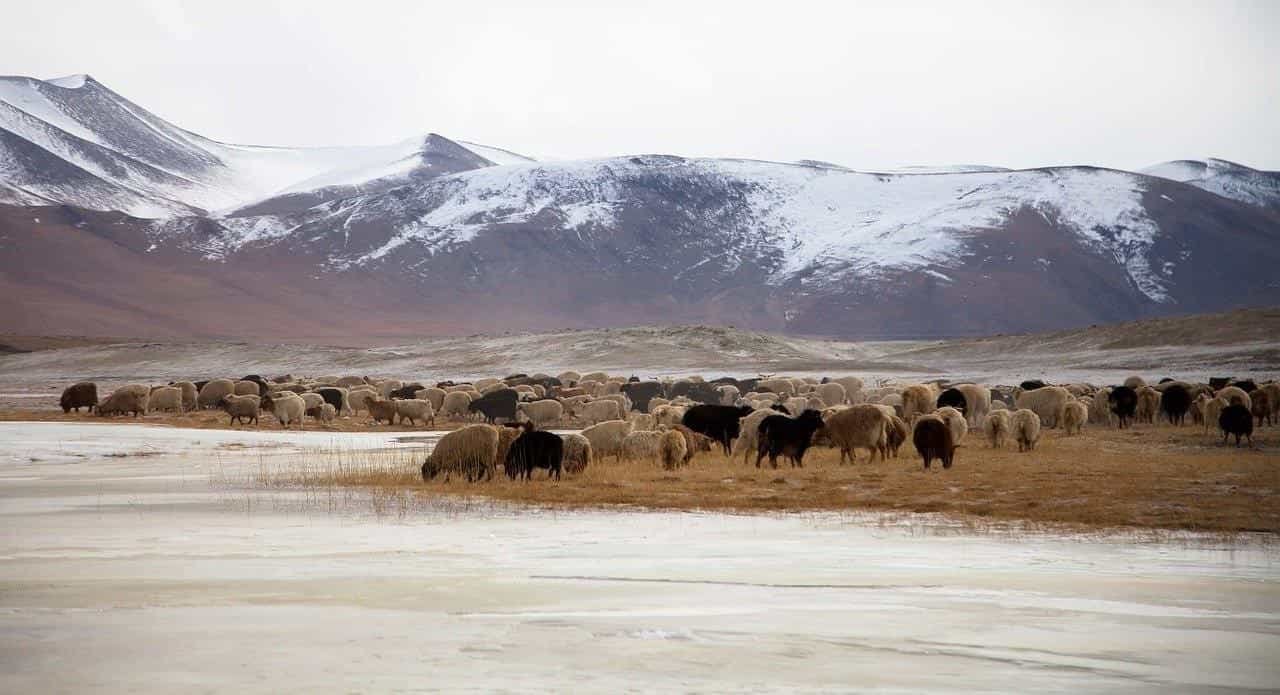
What makes the Hampta Pass trek truly special is the rapid transformation of landscapes. On one side, trekkers walk through dense pine forests, open meadows, river crossings, and vibrant alpine flowers of Kullu. On the other side lies the stark, barren terrain of Lahaul, surrounded by towering brown mountains and glaciers. This sharp contrast is what attracts trekkers from across India and abroad.
The Hampta Pass trek distance is approximately 35 km, and the trek usually takes 5 to 6 days to complete, making it an ideal choice for both beginners and experienced trekkers looking for a high-altitude Himalayan experience in a short time frame.
Hampta Pass Trek Package Overview
A well-curated Hampta Pass trek package typically includes accommodation in camps, all meals during the trek, experienced trek leaders, guides, permits, safety equipment, and medical support. Starting from Manali, the trek passes through scenic campsites like Jobra, Chika, Balu Ka Ghera, and Shea Goru before crossing Hampta Pass.
Many trekkers also opt for the Hampta Pass and Chandratal Lake trek, which adds immense value to the journey. After crossing the pass, a detour to the mesmerizing Chandratal Lake allows trekkers to witness one of the most beautiful high-altitude lakes in the Himalayas, making the experience even more rewarding.
For a true Himalayan winter experience, the Kedarkantha trek is highly recommended.
Trek Fee
₹10,000.00 Original price was: ₹10,000.00.₹8,500.00Current price is: ₹8,500.00.
Book the tour
Highlights of the Hampta Pass Trek
The Hampta Pass Trek is not just a physical journey but a deeply enriching Himalayan experience that attracts trekkers with its dramatic landscapes, altitude adventure, and natural diversity.
- The Hampta Pass Trek is regarded as one of the most dramatic crossover treks in the Himalayas, offering a rare transition from the lush green meadows of the Kullu Valley to the stark, barren cold desert landscapes of Lahaul and Spiti.
- The route takes trekkers across iconic high-altitude passes including Hampta Pass, with views extending towards the Spiti region and the Rohtang Pass area, making it a visually rewarding journey throughout.
- A major highlight of the trek is the visit to the crescent moon-shaped Chandratal Lake, where crystal-clear waters reflect the changing hues of the sky and surrounding barren mountains, creating a surreal high-altitude experience.
- Standing at an altitude of around 14,000 feet, the trek offers breathtaking panoramic views of surrounding Himalayan peaks. The landscapes transform dramatically with every day of trekking, keeping the experience fresh and exciting.
- Trekkers are rewarded with stunning sunrise and sunset views over the Deo Tibba and Indrasan peaks, which remain etched in memory long after the trek ends.
- One of the most unique aspects of the Hampta Pass trek is the striking contrast between the Kullu and Lahaul valleys, along with the opportunity to witness varied flora and fauna as altitude and terrain change.
- The trek features unforgettable camping experiences at scenic locations like Balu Ka Ghera and Shea Goru, surrounded by rivers, glaciers, and towering mountains.
- For trekkers interested in experiencing frozen lakes and winter landscapes, the Brahmatal Trek is another excellent Himalayan trekking option worth exploring.
If you want to witness frozen lakes up close, the Brahmatal trek is the best choice.
How Difficult is the Hampta Pass Trek?
The Hampta Pass Trek difficulty level is considered moderate, making it suitable for fit first-time trekkers as well as experienced hikers. The trek starts from Manali, situated at an altitude of approximately 6,275 ft, and gradually ascends to the Hampta Pass at around 14,000 ft over a span of four days.
For most of the route, the trail involves relatively easy walks through lush valleys, river crossings, and open meadows. However, the terrain becomes more challenging as you approach the pass. The Hampta Pass summit day is the most demanding part of the trek and involves a long trekking duration of around 8 to 9 hours, including a steep ascent and descent.
Due to its gradual ascent profile and manageable trail conditions, the Hampta Pass trek is classified as a moderate Himalayan trek and is ideal for those attempting their first high-altitude crossover trek, provided they are physically prepared.
To enjoy the trek comfortably, it is recommended to dedicate at least 4 weeks to fitness preparation. Begin with brisk walking and gradually incorporate jogging or running to improve cardiovascular endurance. A good fitness benchmark is the ability to complete 5 km in around 37 minutes without excessive fatigue. Strength training for legs and core will further help in managing long trekking days and steep climbs.
With proper preparation and pacing, the Hampta Valley trek becomes a rewarding and enjoyable experience rather than an exhausting one.
Best Time to do the Hampta Pass Trek
The Hampta Pass Trek best time falls between June and September, with the trekking season sometimes extending into early October, depending on weather conditions. As a high-altitude trek with moderate difficulty, Hampta Pass offers distinctly different experiences across months.
Hampta Pass Trek in June
June is one of the most exciting months to do the trek, especially for snow lovers. During this time, trekkers can expect significant snow accumulation, particularly from Balu Ka Ghera onwards. Snow is often encountered while descending into the Lahaul side as well, making the crossover dramatic and visually stunning.
In June, the valley leading up to Hampta Pass remains narrow with limited sunlight, and the snow depth is comparatively high. Patchy snow can also be seen in the grasslands, adding to the alpine charm of the trek.
Get upto 25% off on: Kashmir Great Lakes Trek & Tarsar Marsar Trek
Temperature During the Hampta Pass Trek
During June, daytime temperatures typically range between 15°C and 20°C, which are comfortable for trekking. However, nights can be cold, with temperatures dropping to around 1°C to 5°C, especially at higher campsites.
As the season progresses into July, August, ands, and September, snow gradually melts, revealing lush green meadows, blooming flowers, and flowing streams, making the Hampta Pass
Hampta Pass Trek in July
July brings a beautiful blend of lingering snow and blooming meadows. While snow still remains near the pass, lower sections of the trek transform into lush green landscapes with wildflowers and flowing streams.
This month also offers improved trail accessibility and longer daylight hours, making it suitable for a wider range of trekkers.
- Day Temperature: 15°C to 18°C
- Night Temperature: 3°C to 7°C
- Best for: First-time trekkers seeking variety in landscapes
Hampta Pass Trek in August (Monsoon Beauty)
August showcases the most vibrant version of the Kullu Valley. Meadows are at their greenest, rivers flow strongly, and the scenery feels alive. However, light to moderate rainfall can be expected due to the monsoon season.
Despite the rains, Hampta Pass remains a preferred monsoon trek because the Lahaul side lies in a rain-shadow region, keeping the trail manageable.
- Day Temperature: 12°C to 18°C
- Night Temperature: 4°C to 8°C
- Best for: Nature lovers and photographers
Hampta Pass Trek in September (Clear Views & Stable Weather)
September is considered the most stable and scenic month for the Hampta Pass trek. The monsoon recedes, skies turn clear, and mountain views become sharp and expansive. Snow is minimal, making trail conditions easier and safer.
This is also the best time to combine the trek with the Hampta Pass and Chandratal Lake trek, as road access improves and weather conditions remain favourable.
- Day Temperature: 10°C to 15°C
- Night Temperature: 0°C to 5°C
- Best for: Clear views, calm weather, and relaxed trekking
Short Itinerary – Hampta Pass Trek (6 Days)
- Altitude: Jobra (9,800 ft) to Chika (10,100 ft)
- Drive Duration: 2 hours (Manali to Jobra)
- Trek Distance: 2.5 km
- Trek Duration: 2 hours
- Accommodation: Tent stay at Chika
- Highlight of the Day: Scenic Rani Nallah and alpine forests
The journey begins with a scenic drive from Manali to Jobra after breakfast. Upon arrival, meet the trek leader for a detailed briefing about the trail and safety guidelines. The trek from Jobra to Chika is easy and gradual, making it ideal for acclimatization.
Walking alongside the Rani Nallah, the trail passes through pine forests and open meadows. You will witness panoramic views of the Dhauladhar range on one side and the Pir Panjal range on the other. Reach Chika by afternoon and spend the evening relaxing at the campsite amidst snow-capped peaks.
- Altitude: 10,100 ft to 11,900 ft
- Trek Distance: 8.5 km
- Duration: 5–6 hours
- Accommodation: Tent stay at Balu Ka Ghera
- Highlight of the Day: River crossings and rhododendron-lined trails
Start the day with breakfast before trekking towards Balu Ka Ghera. The trail gradually ascends through vast grasslands, glacial streams, and vibrant rhododendron forests. Several river crossings add to the adventure.
As you approach Balu Ka Ghera, the valley opens up with dramatic mountain views and snow patches depending on the season. The campsite is set in a wide basin surrounded by towering peaks, making it one of the most scenic campsites of the trek.
- Altitude: 11,900 ft to 14,100 ft (Hampta Pass) to 12,900 ft
- Trek Distance: 7 km
- Duration: 9–10 hours
- Accommodation: Tent stay at Shea Goru
- Highlight of the Day: Crossing Hampta Pass
This is the most challenging and rewarding day of the trek. After an early breakfast, begin the ascent towards Hampta Pass. The trail includes steep climbs, rocky patches, and snowfields.
From the top of the pass, enjoy breathtaking views of Deo Tibba, Indrasan, and the stark landscapes of Lahaul. The descent towards Shea Goru marks a dramatic shift in scenery from green valleys to cold desert terrain. Reach the campsite by evening and rest after a long trekking day.
- Altitude: 12,900 ft to 11,000 ft
- Trek Distance: 7 km
- Trek Duration: 4–5 hours
- Drive Distance: 49 km (round trip)
- Accommodation: Tent stay near Chhatru
- Highlight of the Day: Chandratal Lake
Wake up to a stunning sunrise over the Lahaul valley. After breakfast, begin the downhill trek to Chhatru, where the routes of Hampta Pass, Spiti, and Rohtang Pass converge.
If road and weather conditions permit, drive to the iconic Chandratal Lake, located at an altitude of approximately 14,100 ft. Spend time exploring the crescent-shaped lake and soaking in its serene beauty before returning to the campsite for an overnight stay.
- Altitude: Chhatru (11,000 ft) to Manali (6,730 ft)
- Drive Distance: 85 km
- Duration: 4–6 hours
- Highlight of the Day: Atal Tunnel and Chandra River views
Begin the return journey early in the morning. The drive passes along the Chandra River, offering magnificent views of high-altitude landscapes. Crossing the Atal Tunnel adds a memorable experience to the journey.
Arrive in Manali by afternoon, marking the end of the Hampta Pass Trek. Bid farewell to the team and depart with unforgettable trekking memories.
This day acts as a buffer in case of bad weather or delays. If unused, it can be spent exploring Manali, visiting local cafés, temples, or nearby attractions.
This day acts as a buffer in case of bad weather or delays. If unused, it can be spent exploring Manali, visiting local cafés, temples, or nearby attractions.
Things to pack for Hampta Pass Trek
Packing correctly is essential for a safe and comfortable Hampta Pass Trek, as weather and terrain change rapidly at high altitudes. Along with mandatory documents such as a valid ID card, medical certificate, and disclaimer form, the following items should be included in your backpack:
Clothing & Footwear
- Trekking shoes with strong grip, ankle support, and snow-handling capability are mandatory
- Layered clothing system is crucial for insulation and temperature regulation
- Cotton t-shirts for daytime
- Thermal innerwear (top and bottom)
- Light fleece jacket and at least one thick fleece layer
- Trek pants (quick-dry preferred)
- Waterproof jacket or poncho
Backpack & Accessories
- 50–60 litre trekking backpack with padded hip belt and shoulder support
- Daypack (optional) for summit day
- Sunglasses with UV protection
- Sun cap and woolen cap
- Woolen gloves and inner liners
- 4–5 pairs of trekking socks
- Headlamp or torch with extra batteries
- Trekking pole for balance on steep ascents and descents
- Rain cover for backpack
Essentials & Miscellaneous
- Personal toiletry kit (biodegradable items preferred)
- Basic cutlery and water bottle
- Plastic covers or zip-lock bags for waterproofing
- Portable charger / power bank
- Energy snacks like dry fruits, nuts, chocolates, protein bars, and biscuits
- Flexible stick or walking support (if required)
Medical & Safety Items
- Personal medicines (if any)
- Basic first-aid kit
- Pain relief spray or balm
- Diamox or altitude-related medication (only after medical consultation)
Packing smartly ensures better acclimatization, comfort, and overall trekking experience on the Hampta Pass trek.
How to Reach the Hampta Pass Trek Base Camp (Jobra)
The Hampta Pass Trek is a spectacular crossover trek connecting the lush Kullu Valley with the stark landscapes of Lahaul in Himachal Pradesh. Situated at an altitude of approximately 4,200 meters, the trek offers grasslands, alpine rivers, flower-filled meadows, and dramatic mountain scenery.
Base Camp: Jobra (9,200 ft)
Jobra is the official base camp and starting point of the Hampta Pass Trek. This picturesque village is surrounded by dense oak forests, mountain streams, and open meadows, making it an ideal beginning for acclimatization.
Reaching Jobra
- Nearest city: Manali
- Distance from Manali: Approx. 17 km
- Travel time: 1–1.5 hours
There are no direct bus or train services from Manali to Jobra. The only way to reach the base camp is by:
- Private cabs (most convenient option)
- Shared cabs (available but less frequent)
Cabs can be hired easily from the Manali bus stand or Mall Road. Most trek packages include transfers from Manali to Jobra as part of the itinerary.
Reaching Manali is straightforward, as it is well connected by road from Delhi and Chandigarh. The nearest railway station is Joginder Nagar, and the nearest airport is Bhuntar Airport, from where Manali can be reached by taxi.
Fitness Tips for Conquering the Hampta Pass Trek
Proper physical preparation is crucial to fully enjoy and successfully complete the Hampta Pass Trek. Since this is a high-altitude trek involving long walking hours, steep ascents, and varied terrain, following a focused fitness routine is highly recommended.
- Start your fitness preparation at least 4 to 6 weeks before the Hampta Pass trek. This gives your body enough time to build stamina and strength.
- Focus on cardiovascular training such as brisk walking, jogging, cycling, or swimming. Aim for 150–180 minutes of moderate aerobic exercise per week to improve endurance
- Strengthen your legs with exercises like squats, lunges, step-ups, and calf raises, as these help handle steep climbs and long descents.
- Include core-strengthening exercises such as planks, bridges, and mountain climbers to improve balance and stability while trekking with a backpack.
- Go on short weekend hikes to simulate real trekking conditions. Gradually increase distance and elevation gain to prepare your body for altitude changes.
- Practice stretching or yoga regularly to enhance flexibility, reduce muscle stiffness, and prevent injuries.
- Stay well-hydrated during training and on the trek, as dehydration can worsen fatigue and altitude-related issues.
- Maintain a balanced diet rich in carbohydrates for energy, proteins for muscle recovery, and healthy fats. Include whole grains, vegetables, fruits, and lean protein sources.
- Build mental resilience through mindfulness or meditation, as trekking at high altitude can be mentally as well as physically demanding.
- Ensure adequate rest and recovery days in your routine to avoid burnout or injuries.
With consistent preparation, the Hampta Pass Trek becomes comfortable even for fit first-time trekkers.
Why You Should do the Hampta Pass Trek?
The Hampta Pass Trek is one of the most rewarding crossover treks in Himachal Pradesh, offering dramatic landscape changes within a short duration. The trek begins near Sethan (close to Manali) and concludes in the stark terrains of Chatru in Spiti Valley, making it truly unique.
Here’s why the Hampta Pass Trek deserves a spot on your trekking list:
- It is a short-duration trek, covering approximately 20–25 km over 5 days, making it ideal for beginners and first-time high-altitude trekkers.
- The trek features Balu Ka Ghera, one of the most scenic campsites at around 12,000 ft, surrounded by towering mountains and glacial streams.
- Hampta Pass is a true crossover trek, where you witness the lush green meadows and forests of the Kullu Valley on one side and the cold, barren landscapes of Spiti Valley on the other.
- The dramatic shift in terrain, vegetation, and colors within a single trek is one of its biggest highlights.
- The trek offers an extension to Chandratal Lake, one of the most beautiful high-altitude lakes in Himachal Pradesh, known for its crescent shape and surreal reflections.
- Snow patches, river crossings, alpine valleys, and panoramic mountain views make this trek visually diverse and thrilling.
Whether you are a beginner looking for your first Himalayan adventure or an experienced trekker seeking contrasting landscapes, the Hampta Pass Trek delivers an unforgettable experience.
Best Time For Hampta Pass Trek
Hampta Pass is open to do for 6 months. However, it is done mostly from June to September. It is done even in May and October also, but those are not the best months to do this trek.
However, each month is different even from June to September. Here is how the trek looks in each of these months.
Hampta Pass Trek in May
In May Hampta Pass is still covered in snow. The trail is snowy, and it becomes difficult to finish the trek in May. However, many seasoned trekkers attempt this trek in May.
Hampta Pass Trek in June
Since June is the start of the summer, the snow is still quite thick and high and covers most of the higher altitudes. One of the reasons that June has still snow in this trek is because the valley that goes up to Hampta Pass is not wide and doesn’t get much sunlight. This is the reason that the trek becomes slightly difficult and tiring this month.
Hampta Pass Trek in July
July month is the start of the melting of snow. However, you will still see patches of snow here and there on this trek. From this month onwards, you start seeing the flocks of flowers like marigolds, blue poppies. This is the month wildflowers begin to come out. The trek follows, at times, a patch going through these beds of wildflowers.
Hampta Pass Trek in August
If we narrow down the best time for this trek, then it definitely will be from mid-July to the end of August. As august comes, there you will see vibrant grasslands, flowers nodding their head and sky above with clouds mostly. The rain begins to fall and continues so until September. The temperature isn’t cold or unbearable this month. This is the month that sees most of the trekkers flocking the Hampta Pass trail.
Hampta Pass Trek in September
In September month expect rain while you are trekking here. Get your raincoats and umbrellas along with you. However, the cloudy overcast begins to clear by the end of September and gives way to the autumn colors and clear sky. The views of sunrise and sunset are breathtaking at this time of the year.
Hampta Pass Trek in October
Hampta Pass trek is colder and nippier this month. If you are someone whose skin is thick for the cold, then you will enjoy this trek this month. The nights are colder and the temperature falls below zero degrees. The river streams that dance and are full during summer months, start to dry and get scanty of water. While it is possible to do the trek in October it is not as much fun.
Hampta Pass Trek in November
November isn’t the ideal month for this trek. The night temperature is extremely cold. The trail has snow all along and it is much riskier and trickier to attempt this trek in November.
Hampta Pass Trek in December
December is the most riskier and quite difficult month to go for this trek. Our recommendation is not to go for this trek in December as the snowfall makes reaching the pass near to impossible.
Is Hampta Pass Trek Safe?
Yes, the Hampta Pass Trek is considered safe for both beginners and experienced trekkers when done with proper preparation and a guided team. It is one of the safer high-altitude crossover treks in Himachal Pradesh due to its non-technical terrain, gradual altitude gain, and well-defined trail. However, like any Himalayan trek, it requires caution, discipline, and adherence to safety guidelines.
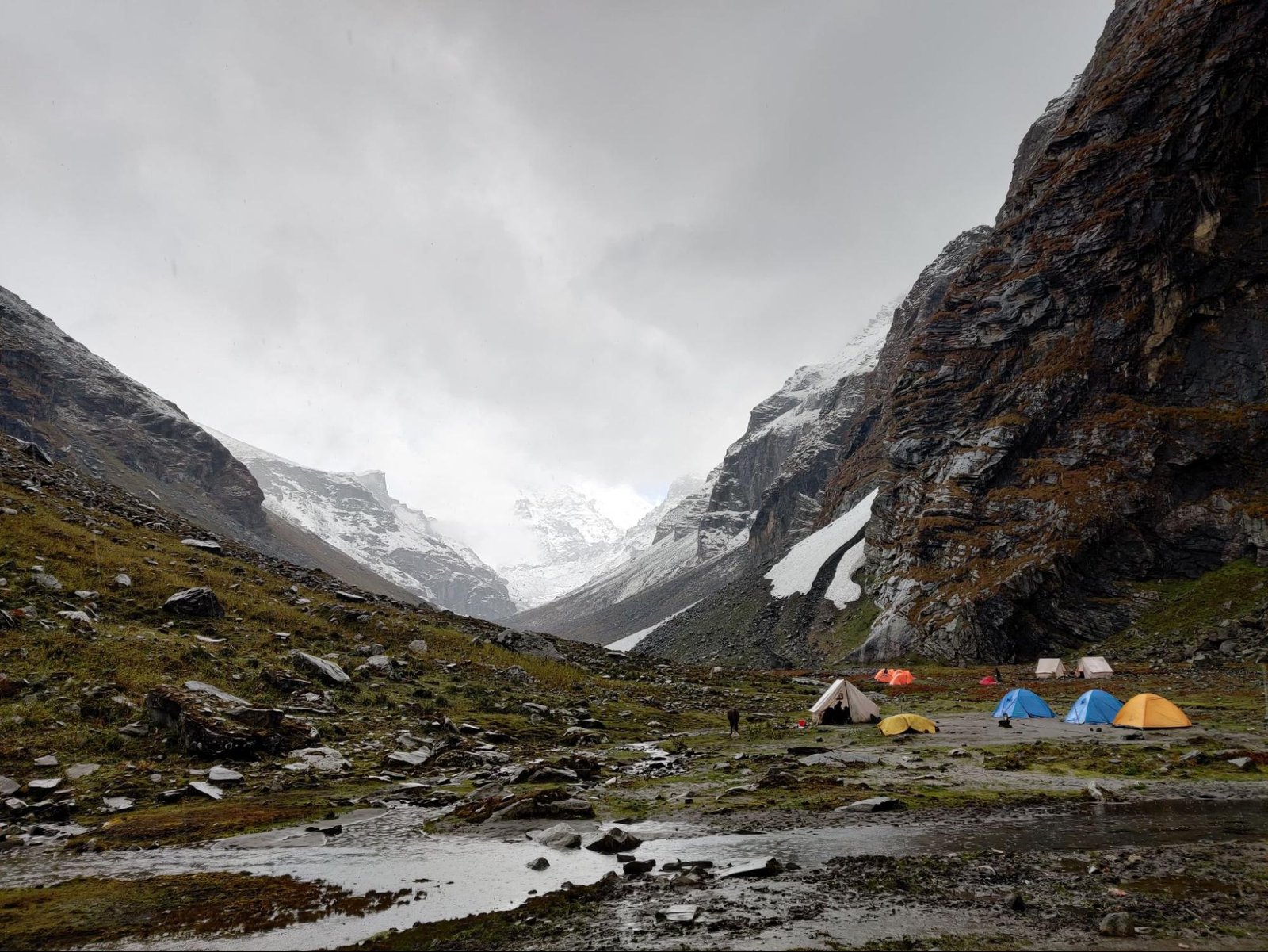
The terrain of the Hampta Pass trek is non-technical and does not involve dangerous cliff climbs or exposed ridges. Compared to many high-altitude treks, it poses fewer fatal risks. That said, trekkers should still be mindful of certain sections.
- The trail includes river crossings, gradual ascents, and descents that need careful navigation.
- The descent from Hampta Pass is the most challenging part of the trek. It can be slippery and steep, especially when snow is present.
- In June, snow often covers sections near the pass, making the trail slippery. Using microspikes is strongly recommended during this period.
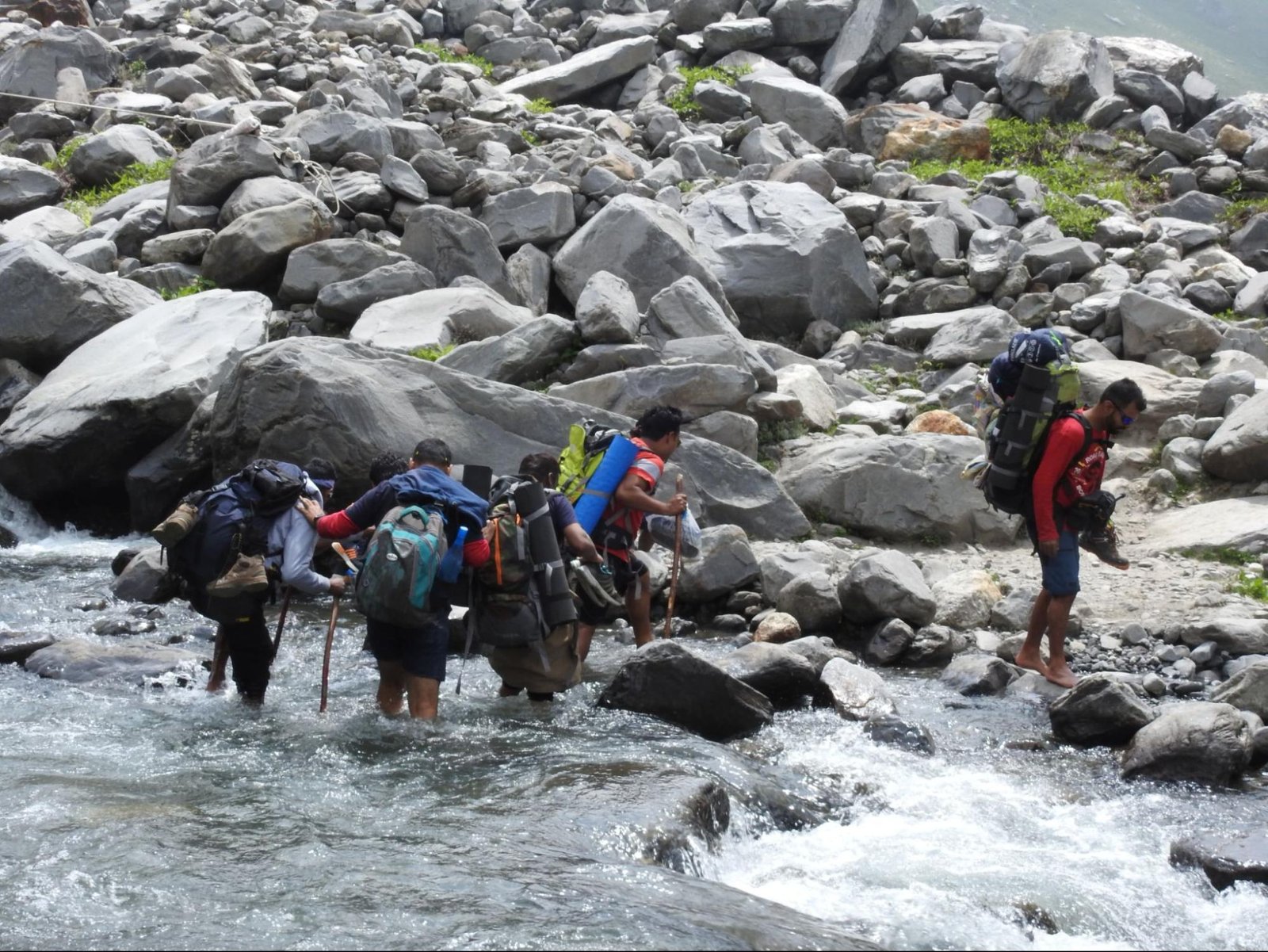
- While crossing streams or rivulets, always follow the trek leader’s instructions. Trekkers are often advised to form a human chain to maintain balance against strong water currents.
- Avoid stopping midway while crossing streams, even if the water feels extremely cold. Continue moving steadily until you reach the other bank.
With proper footwear, trekking poles, and guidance, the terrain remains manageable and safe.
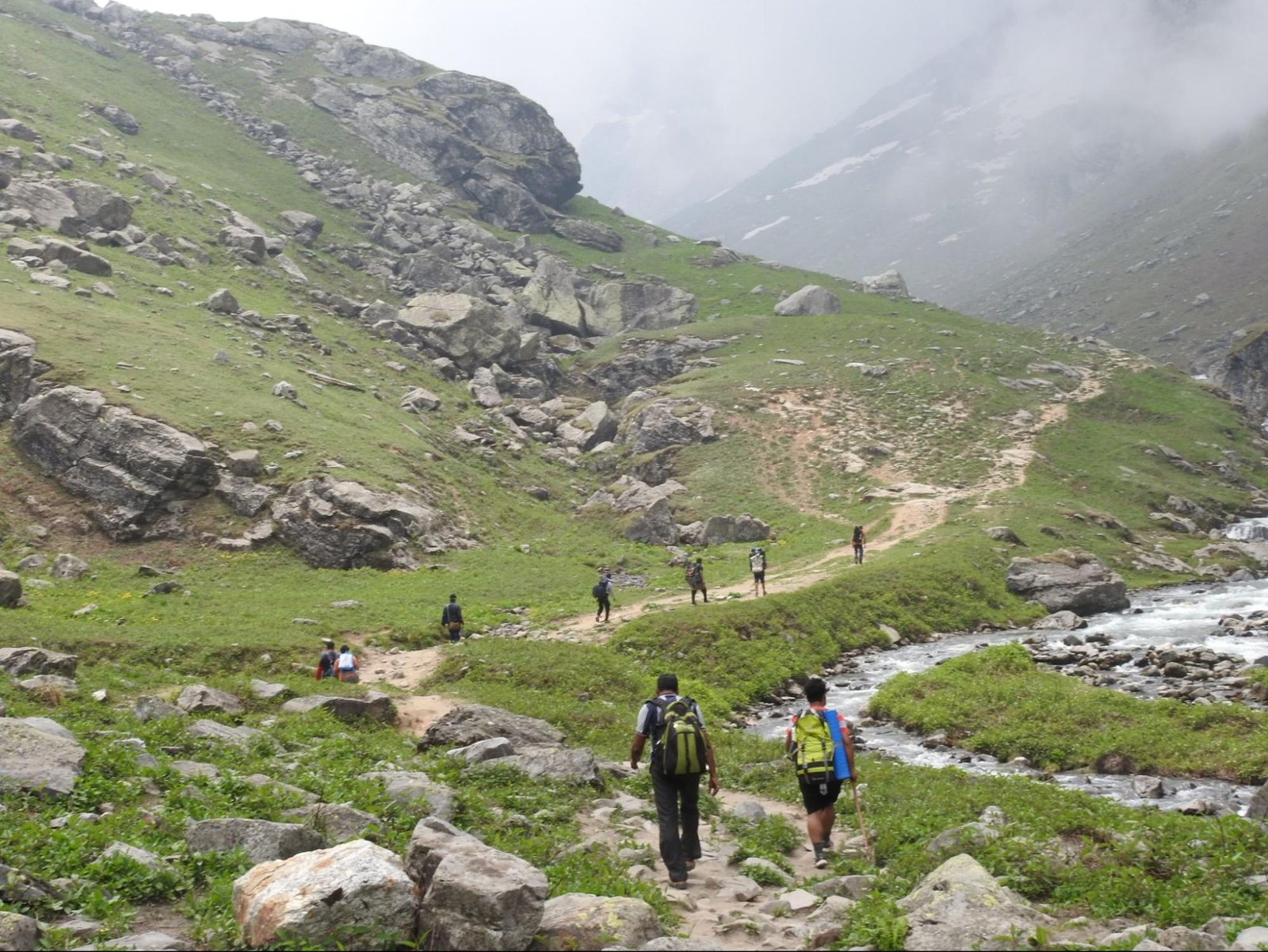
The maximum altitude of Hampta Pass is approximately 4,200 meters (14,000 ft), which is reached on Day 3 of the trek. By this time, most trekkers are well-acclimatized due to the gradual altitude gain.
- The trek begins at Jobra, located at around 3,000 meters, allowing sufficient time for the body to adapt.
- Symptoms like headache, nausea, dizziness, or fatigue should never be ignored. Immediately inform your trek leader if any discomfort occurs.
- Trek leaders are trained to handle Altitude Mountain Sickness (AMS) and will guide you on rest, hydration, or descent if needed.
- To minimize altitude-related issues, maintain a slow trekking pace, drink plenty of fluids, and avoid exertion.
The controlled ascent profile makes Hampta Pass a relatively safe high-altitude trek.
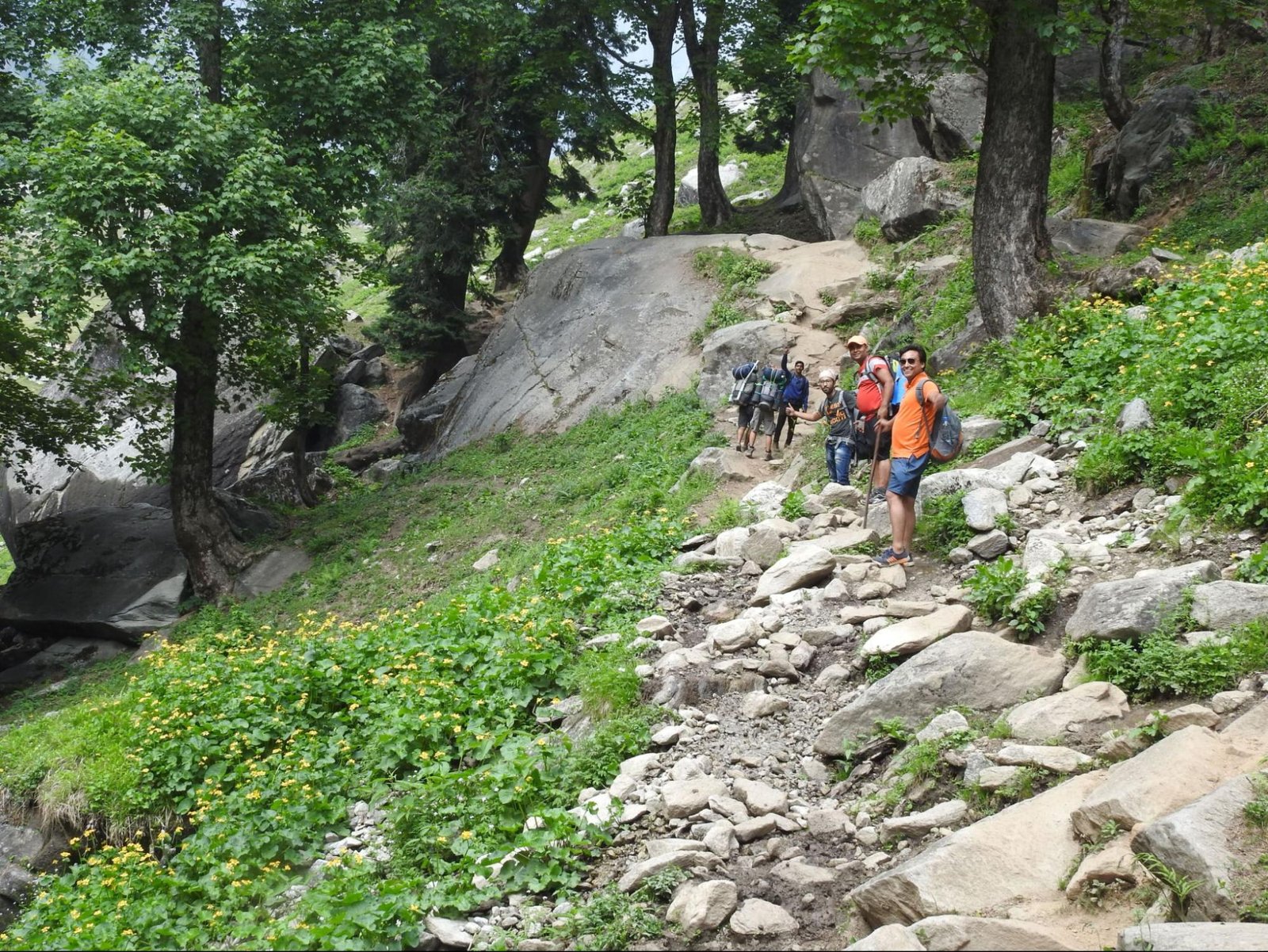
Weather conditions vary significantly depending on the trekking month, and preparedness is key.
- June: Snow is still present near the pass, making the trail slippery. Extra caution is needed while descending. Equipment like microspikes and gaiters is highly useful.
- July and August: These months experience monsoon showers. Rain can make the trail muddy and slippery, and stream water levels rise, increasing the difficulty of crossings.
- During rainy conditions, trekkers must walk carefully, avoid rushing, and place each step firmly to maintain balance.
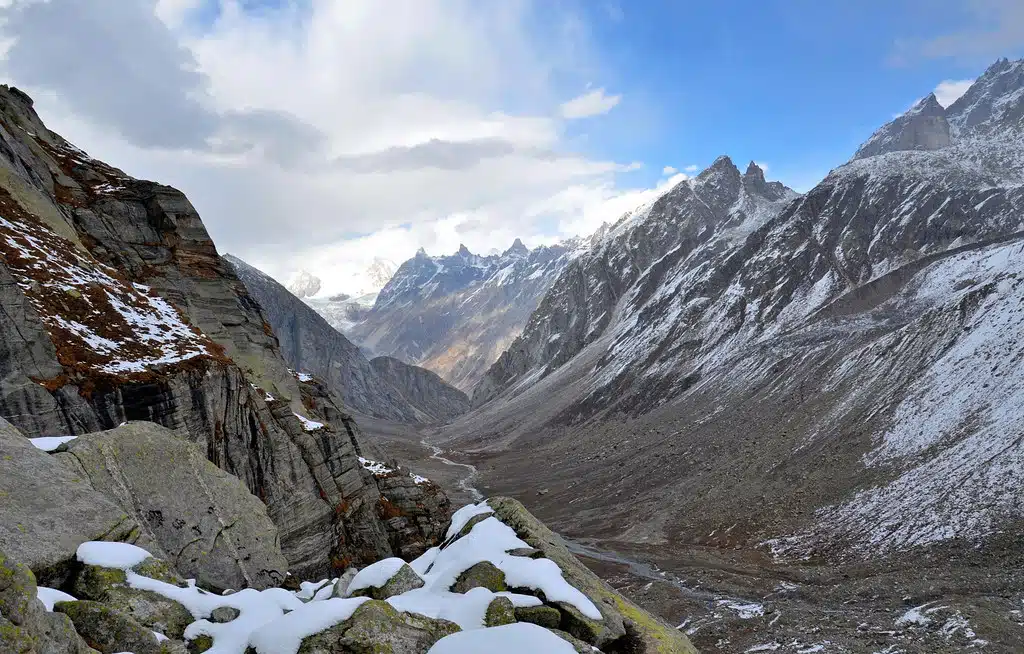
The Hampta Pass trek offers clear emergency exit routes, adding an extra layer of safety.
- If a trekker feels unwell before crossing Hampta Pass, the safest option is to descend back to Jobra and return to Manali.
- Once the pass is crossed, the safest exit is to continue forward towards Chatru and then proceed to Manali via Rohtang Pass.
- The nearest medical facility is Mission Hospital, Manali.
Always consult your trek leader before exiting, as they will guide you safely based on weather, health, and terrain conditions.
The Hampta Pass trek starts from Manali, which is well-connected by road, air, and rail.
Option 1: By Bus
Regular government and private buses operate from Delhi and Chandigarh to Manali. The journey usually takes 10–14 hours and is the most economical option.
Option 2: By Air
The nearest airport is Bhuntar Airport (Kullu). From there, Manali is about a 1.5–2 hour drive by taxi.
Option 3: By Train
The nearest major railway station is Chandigarh. From Chandigarh, you can hire a private or shared cab to Manali.
Hampta Pass Trek Distance & Daily Walking Details
The Hampta Pass trek distance is approximately 34 to 35 kilometres, covered comfortably over a span of five days. The trek is designed in a way that allows gradual acclimatisation, making it ideal for beginners while still engaging for experienced trekkers. Each day involves a steady increase in distance and terrain complexity, helping the body adapt naturally to altitude and exertion.
The trek begins with a short and easy walk from Jobra to Chika, covering around 2.5 kilometres in about 2 to 3 hours. This initial stretch serves as a warm-up and introduces trekkers to the lush meadows of the Kullu Valley. The second day, from Chika to Balu Ka Ghera, is longer, spanning roughly 8 to 9 kilometres and taking around 5 to 6 hours to complete. This section includes gentle ascents, river crossings, and wide valley views, making it one of the most scenic walking days.
The most challenging and rewarding day is the third, when trekkers move from Balu Ka Ghera to Shea Goru via Hampta Pass. Although the distance is around 7 kilometres, the trek can take 9 to 10 hours due to the steep ascent to the pass and the long descent that follows. The maximum altitude reached on this day is 14,100 feet, with an ascent of approximately 2,200 feet and a descent of nearly 1,800 feet. The landscapes change dramatically here, marking the transition from Kullu’s greenery to Lahaul’s stark terrain.
On the fourth day, the walk from Shea Goru to Chatru covers close to 7 kilometres and usually takes 4 to 5 hours. This is largely a downhill walk and feels comparatively easier, allowing trekkers to enjoy the vast open valleys of Lahaul. The final day involves a drive back to Manali, often with a detour to Chandratal Lake, weather permitting. On average, trekkers walk 4 to 6 hours per day, except on the pass-crossing day, which is longer and more demanding.
Hampta Pass Trek Map & Route Overview
The Hampta Pass trek map clearly highlights why this trek is considered one of the most dramatic crossover treks in Himachal Pradesh. The route begins at Jobra, a short drive from Manali, and gradually winds through the green landscapes of the Kullu Valley before crossing into the cold desert of Lahaul. This sharp contrast in terrain is one of the defining features of the trek.
From Jobra, the trail moves to Chika, following the Rani Nallah stream through open meadows and forested patches. The next stretch leads to Balu Ka Ghera, a wide valley campsite surrounded by rocky slopes and glacial streams. From here, the trail climbs steeply towards Hampta Pass, which stands at an altitude of 14,100 feet. After crossing the pass, the route descends sharply into Shea Goru, where the landscape turns barren and rugged. The trek concludes at Chatru, a remote road-head in the Lahaul region.
A detailed Hampta Pass trek map, including campsites, altitude points, and route markings, is generally provided to trekkers before the expedition. While on the trail, daily briefings help explain the elevation profile and terrain changes, ensuring clarity even without constant map reference. The elevation gain is gradual until Balu Ka Ghera, followed by a sharp climb to the pass and a steady descent into Lahaul, making the route challenging yet well-balanced.
This clearly defined route and elevation pattern make the Hampta Pass trek not just scenic but also strategically planned for safety, acclimatisation, and an unforgettable Himalayan experience.
Hampta Pass Trek for Beginners – Is It Right for You?
The Hampta Pass trek for beginners is often considered one of the safest and most rewarding introductions to high-altitude trekking in the Indian Himalayas. This trek is well-suited for first-time trekkers because of its gradual altitude gain, well-defined trail, and short overall duration. Unlike many Himalayan treks that demand prior experience, Hampta Pass allows beginners to adapt comfortably while still offering a true mountain adventure.
From a fitness perspective, a basic level of physical preparedness is sufficient. Anyone who can walk for 5 to 6 hours a day with a backpack, climb stairs continuously, or jog for 20 to 30 minutes should be able to handle this trek with some prior preparation. The trail does include ascents, descents, and river crossings, but none of these require technical climbing skills. With a few weeks of cardio training and leg strengthening exercises, most beginners can complete the trek comfortably.
In terms of age suitability, the Hampta Pass trek is ideal for participants between 12 and 55 years, provided they are medically fit. Younger trekkers benefit from the short distances and scenic campsites, while older participants appreciate the gradual acclimatisation and professional support available throughout the trek. Mental preparedness is equally important. The trek involves changing weather conditions, basic campsite facilities, and long walking days, especially on the pass-crossing day. Beginners who approach the trek with patience, discipline, and a willingness to step out of their comfort zone often find the experience deeply rewarding.
Overall, if this is your first Himalayan trek and you are looking for a journey that balances safety, adventure, and stunning scenery, Hampta Pass is an excellent choice.
Hampta Pass Trek vs Other Himachal Treks
When compared to other popular treks in Himachal Pradesh, the Hampta Pass trek stands out for its dramatic landscape transitions and balanced difficulty level. Treks like Beas Kund and Bhrigu Lake are shorter and easier, making them suitable for beginners who want a quick mountain experience. However, these treks primarily offer alpine meadows and glacier views without significant terrain variation. Hampta Pass, on the other hand, takes trekkers through forests, river valleys, snowfields, high mountain passes, and finally into the stark landscapes of Lahaul, all within a single trek.
Compared to Kedarkantha, which is a winter-focused trek known for snow walking and summit views, Hampta Pass offers more diversity in terrain and scenery. Kedarkantha is often considered easier in terms of trail navigation but lacks the crossover experience that makes Hampta Pass unique. Hampta also provides better exposure to high-altitude trekking conditions, making it a stronger stepping stone for those planning more challenging treks in the future.
When placed alongside advanced treks like Friendship Peak, the difference becomes clearer. Friendship Peak is a mountaineering expedition requiring technical skills, ice axes, and prior high-altitude trekking experience. Hampta Pass does not demand any technical expertise and remains accessible to fit beginners, making it a safer and more confidence-building option.
In terms of beginner friendliness, Hampta Pass strikes the perfect balance. It is more adventurous and immersive than short meadow treks, yet far more approachable than technical or expedition-style climbs. This makes it one of the best treks in Himachal Pradesh for those looking to experience a complete Himalayan journey without overwhelming difficulty.
Hampta Pass Trek Weather & Temperature (Month-wise Overview)
Understanding the weather and temperature of the Hampta Pass trek is essential for planning a safe and enjoyable experience, as conditions in the Himalayas change significantly from month to month. The trekking season typically runs from June to September, and each month offers a very different landscape and challenge level.
In June, the trek is dominated by snow, especially near the Hampta Pass crossing. Daytime temperatures usually range between 10°C to 15°C, while night temperatures can drop to 0°C or even lower at higher camps like Balu Ka Ghera and Shea Goru. Snow availability is high, making June ideal for trekkers who want to experience snowfields and dramatic alpine scenery. Rainfall is minimal during this month, but river crossings can be challenging due to snowmelt. Chandratal Lake may not always be accessible in early June because roads often remain blocked by snow.
July marks the beginning of the monsoon season. Day temperatures remain comfortable, usually between 12°C to 18°C, while nights hover around 5°C to 8°C. Snow gradually melts away from the trail, especially after mid-July. However, rainfall increases, and the probability of rain is high, particularly in the Kullu valley side. Streams swell during this period, making river crossings more demanding. Chandratal Lake becomes more accessible toward the end of July, depending on road conditions and weather stability.
In August, the landscape is at its greenest. Meadows bloom, and the valleys look vibrant and lush. Day temperatures range from 13°C to 18°C, with night temperatures between 6°C to 9°C. Rainfall continues, though it tends to be more predictable than in July. While snow is mostly absent on the trail, mud and slippery sections are common. Chandratal Lake is usually accessible during this month, but visits remain weather-dependent due to landslide risks on the approach roads.
September is considered the most stable and visually striking month for the Hampta Pass trek. The monsoon recedes, skies clear up, and visibility improves dramatically. Day temperatures range from 10°C to 16°C, while nights can get colder, dropping to 2°C to 5°C. Snowfall is minimal unless there is an early western disturbance. Rain probability is low, making September the safest month in terms of trail conditions. This is also regarded as the best month to visit Chandratal Lake, as roads are usually open and the lake reflects the surrounding mountains under clear blue skies.
Overall, trekkers seeking snow should prefer June, while those looking for stable weather and Chandratal access should plan for September.
Chandratal Lake Extension – What to Expect
The Chandratal Lake extension is one of the biggest highlights of the Hampta Pass trek, but it is important to understand that this visit is optional and highly dependent on weather and road conditions. Chandratal Lake is located at an altitude of approximately 4,300 meters and is accessed from Chatru, the endpoint of the Hampta Pass trek.
The distance from Chatru to Chandratal Lake is around 45 to 50 kilometers by road, and the journey typically takes 2 to 3 hours each way, depending on road conditions. The route passes through rugged terrain with unpaved roads, water crossings, and loose gravel sections. Because of this, the drive can be physically taxing and is undertaken only when weather conditions are stable.
The best time to visit Chandratal Lake is from mid-July to September, with September being the most reliable month. Early in the season, especially in June and early July, access roads may remain blocked due to snow or recent landslides. Even during peak season, sudden weather changes can force authorities or trek operators to skip the visit for safety reasons.
There are instances when the Chandratal extension is skipped entirely. This usually happens due to heavy rainfall, poor road conditions, high water levels at crossings, or administrative restrictions. In some cases, environmental regulations or local authority instructions may limit vehicle movement near the lake. Additionally, visiting Chandratal requires permits and adherence to strict ecological guidelines, which further makes the visit subject to operational feasibility.
Despite these uncertainties, when conditions allow, Chandratal Lake is a breathtaking experience. The crystal-clear blue waters, surrounded by barren mountains, offer a striking contrast to the green valleys of Hampta Pass. Trekkers should approach this extension with flexibility and understand that safety always takes priority over itinerary promises.
Safety Measures by Cliffhangers India
Safety is a non-negotiable priority on the Hampta Pass trek, and Cliffhangers India follows a structured and field-tested safety framework to ensure every trekker’s well-being throughout the journey. All treks are led by experienced local guides from Himachal Pradesh who have deep knowledge of the terrain, weather patterns, and altitude behavior specific to the Hampta region. Their familiarity with local routes, river crossings, and emergency exit points adds a crucial layer of on-ground expertise.
Cliffhangers India maintains a healthy guide-to-trekker ratio, ensuring that groups are never overcrowded. This allows trek leaders to closely monitor each trekker’s physical condition, walking pace, and acclimatization levels. Smaller group sizes also make it easier to manage river crossings, steep ascents, and descents safely, especially near the Hampta Pass crossing.
For medical preparedness, every trek group carries portable oxygen cylinders, a comprehensive first-aid kit, and essential emergency medications. Trek leaders are trained to identify early symptoms of altitude sickness, dehydration, and fatigue. In case a trekker shows any discomfort such as headache, nausea, or breathlessness, immediate action is taken, including rest, hydration, oxygen support, or descent if required.
Weather conditions in the Himalayas can change rapidly, which is why continuous weather monitoring is a standard practice. Trek itineraries are adjusted based on real-time weather updates, snow conditions, and river water levels. No risky decisions are taken for the sake of completing an itinerary, and safety always takes precedence over summit ambitions.
Clear emergency protocols are in place for evacuation scenarios. The trek route offers defined exit points, and the team is prepared to move trekkers to the nearest motorable road or medical facility when necessary. This systematic and responsible approach makes Cliffhangers India a reliable choice for the Hampta Pass trek, especially for first-time and solo trekkers.
Permits Required for Hampta Pass Trek
The Hampta Pass trek falls within a protected Himalayan region, which means certain permits and permissions are mandatory for all trekkers. These permits are issued primarily by the Forest Department and local administrative authorities to regulate trekking activity and protect the fragile ecosystem.
Forest permits are required to enter designated trekking zones along the Hampta Pass route. These permits help authorities track footfall and ensure environmental compliance. In addition, local administration permissions may be required depending on the season, group size, and current regulations in the region.
When trekking with Cliffhangers India, trekkers do not need to worry about permit logistics. All necessary permits are arranged by the organization before the trek begins. Trekkers are only required to provide valid government-issued ID proof in advance. This ensures a hassle-free experience and avoids last-minute issues at checkpoints or forest entry points.
Mobile Network, ATM & Electricity Availability
Connectivity on the Hampta Pass trek is extremely limited, and trekkers should be prepared for long stretches without mobile network or electricity. Manali is the last point with reliable ATM access, so trekkers are strongly advised to withdraw sufficient cash before starting the trek. There are no ATMs available once the trek begins or at remote points like Jobra, Chika, or Chatru.
In terms of mobile network, BSNL has the widest coverage in this region and may work intermittently in Manali and occasionally near Chatru. Networks like Jio and Airtel generally stop working after Manali and are unavailable throughout most of the trek. Complete network blackout should be expected during the trekking days.
Electricity access is also limited. Campsites along the Hampta Pass route do not have charging facilities. Some hotels in Manali may offer charging before and after the trek, but during the trek itself, power banks are essential for keeping phones and cameras charged. Trekkers are advised to conserve battery usage and keep devices switched off when not in use.
Understanding these logistical realities helps trekkers plan better and enjoy the Hampta Pass trek as a true wilderness experience, free from digital distractions.
FAQ's
Is Hampta Pass a difficult Trek?
The Hampta Pass trek is a moderate-level trek that ranges from easy to slightly challenging. It involves an ascent to an altitude of around 14,000 ft over four days, with rugged terrain closer to the pass. Most of the trek includes comfortable walks through scenic valleys. However, the pass-crossing day is the most demanding, involving a strenuous trek of nearly nine hours. A good fitness level is required, and it is recommended to prepare for at least four weeks before the trek.
How many days is Hampta Pass Trek?
The Hampta Pass trek usually takes five days to complete, covering a distance of approximately 22–25 km. The itinerary includes gradual ascents and descents, river crossings, occasional mild showers, and stunning mountain scenery. The trek is suitable for both beginners and experienced trekkers and is best done between June and September.
Is Hampta Pass trek suitable for beginners?
Yes, the Hampta Pass trek is suitable for beginners and is often recommended as a first high-altitude trek. However, basic preparation is essential. Those with a sedentary lifestyle should start fitness training in advance, including cardio exercises and strength training such as squats and brisk walking. Proper preparation ensures the trek remains enjoyable and not physically overwhelming.
What is the distance of Hampta Pass Trek?
Following the standard 5-day itinerary, where the first day includes a drive and short trek and the final day is a return drive, the total trekking distance comes to approximately 25 km. This is the most commonly followed Hampta Pass trek route.
What is the starting point of the Hampta Pass trek?
The journey begins in Manali, but the actual trek starts from Jobra, which is about a 2-hour drive from Manali. Jobra serves as the base village and official starting point of the Hampta Pass trek.
Can Hampta Pass be completed in 2 days?
No, the Hampta Pass trek cannot be completed in 2 days. It typically takes five to six days to complete due to altitude gain, acclimatization needs, and terrain conditions. The trek covers around 25–26 km, which requires gradual progression for safety and enjoyment.
How much does the Hampta Pass trek cost?
The cost of the Hampta Pass trek depends on several factors, including itinerary, inclusions, season, and trek operator. Cliffhangers India offers affordable Hampta Pass trek packages with experienced local guides, safety equipment, and well-planned logistics. Seasonal discounts may also be available.
Which is the best trek in India?
According to many trekkers, the Hampta Pass trek is one of the best treks in India due to its dramatic landscape transitions. The trek uniquely connects the lush green Kullu Valley with the stark, barren Spiti region, offering an unmatched visual experience. It is ideal for those seeking both adventure and natural beauty.
 Call Now
 Chat With Us
Related Tours

8 days
10D/9N
9D/8N