
Kargil in Autumn: Why October and November Are Its Best Months
Overview
Kargil in Autumn: Why October and November Are Its Best Months
Most people who drive the Srinagar-Leh highway use Kargil as an overnight stop. They arrive at night, sleep, leave in the morning, and never actually see the place. They file it under “pit stop” and move on to Leh. This is a significant mistake.
Kargil is one of the two districts of Ladakh and has a lot on offer, a fact that has been wiped from most people’s memory. The war of 1999 left a shadow that the town doesn’t deserve. What Kargil actually is, once you stop and look: a river valley town at 2,676 meters where apricot orchards climb the hillsides, where the Suru River runs turquoise, where Buddhist monasteries share ridgelines with ancient Silk Route trading posts, and where autumn – specifically October and November, turns everything gold.
What Autumn Looks Like in Kargil
Kargil’s autumn runs from mid-September to late October. The valley sits at 2,676 meters, lower than Leh (3,500 m) and lower than most of the famous Ladakh destinations. That lower altitude means a longer growing season, denser vegetation, and a more dramatic color change when autumn hits.
The trees here are poplar, apricot, walnut, willow, and apple. In September, they shift from green to gold, orange, and amber. The poplar trees, tall, straight, planted in rows along village roads and irrigation channels, turn yellow in long vertical stripes against the brown mountain walls. The apricot orchards, which cover the hillsides above the villages, go from green to copper-orange. Walnut trees turn dark gold. Willows along the Suru River drop yellow leaves into turquoise water.
The rivers here are turquoise blue. The sky is azure in contrast to the ivory-white mountains. In autumn, Kargil’s mountains are dotted with golden vegetation against an otherwise barren landscape.
The contrast is the thing. In most autumn destinations, Himachal Pradesh, Uttarakhand, color change happens in dense forest where everything turns at once. In Kargil, the trees are isolated: a row of poplars here, an apricot terrace there, a willow grove along a stream. Each cluster stands out sharply against bare rock and brown mountain slopes. The effect is more graphic, more defined. The color reads from kilometers away.
Why Autumn Specifically (Not Summer or Spring)
- Spring (April): Kargil has its own festival season in April, apricot blossom, which turns the orchards pink and white for 15-20 days. The Apricot Blossom Festival in Kargil includes guided village walks, heritage trails, cycling rides, and storytelling sessions by local elders in villages like Karkitchoo, Chanigund, Hardass, and Handurman. Spring blossom is beautiful but brief, and the mountains behind it are still bare.
- Summer (June-August): Roads are fully open. July and August bring lush greens, wildflowers in high-altitude meadows, festivals in full swing, and mountain passes clear for adventure. Summer is peak accessibility but also peak crowds and prices.
- Autumn (September-October): This is the best season for the specific experience of Kargil, the colors, the harvest, the quiet after peak season, and the clear skies that come after monsoon. Temperatures range from 10°C to 20°C in September, dropping to 5°C to 15°C in October. Neither cold nor hot. The roads are still fully open. Tourist crowds from July-August have cleared. Hotels have availability. Locals are harvesting apricots, walnuts, and apples, the orchards are working orchards, not just scenic props.
Popular Ladakh Tours


7D/6N
8D/7N

6D/ 5N
10D/9N
Places to Visit on an Autumn Kargil Tour
Dachigam National Park, Srinagar
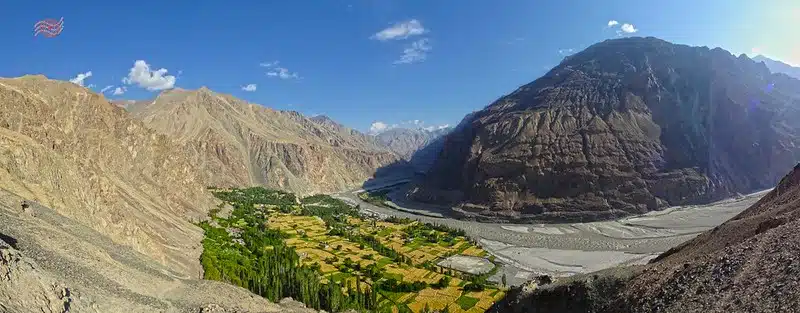
Most Kargil autumn trips begin in Srinagar, and Dachigam is the right way to start. The national park sits on the eastern outskirts of Srinagar at 1,700 to 4,200 meters. In autumn, the chinar trees and mountain forests shift through amber, gold, and rust. The park is home to the Hangul, the critically endangered Kashmir stag and brown bears, leopards, and over 150 bird species.
Autumn light in Dachigam is soft and warm. The forest floor is carpeted with fallen leaves. The contrast between Kashmir’s green lower forests and the bare alpine terrain above creates layered color across different elevations. It’s a good visual entry point before the landscape changes to the more dramatic, sparse terrain of Kargil.

Sonamarg
The drive from Srinagar to Kargil passes through Sonamarg “Meadow of Gold” and in autumn, the name earns itself. The meadows that are green in summer turn golden. The Sindh River running through the valley reflects the color. Pine forests on the slopes above shift to russet and brown.
Sonamarg is 80 km from Srinagar. Most people stop for 30-45 minutes before continuing to Zoji La. In autumn, the light at Sonamarg in the late morning is particularly clean, the valley opens south to north, and the mountains frame the meadow from both sides.

Zoji La Pass and Drass Valley
Zoji La at 11,575 feet is the gateway between Kashmir and Ladakh. The pass is narrow, sometimes single-lane, prone to weather. In autumn, it’s open and clear. The descent from Zoji La into Drass is one of the more dramatic landscape shifts in India, the green forests of Kashmir stop abruptly and the barren mountain terrain of Ladakh begins.
Drass is 60 km from Kargil. Second coldest inhabited place in the world (after Oymyakon, Siberia). In autumn, 5°C to 15°C. Clear. The ridgelines of Tiger Hill, Tololing, and Point 4875 are sharp against blue sky.

Kargil War Memorial
The Kargil War Memorial at Drass is an experience equivalent to the Moment of Truth. You stand in front of a pink sandstone structure where a fire is lit in memory of the martyrs of the Kargil war. Hundreds of plaques from the surrounding fields make the ambience extremely somber. A small museum holds handwritten letters, pictures of high-altitude warfare, memorials, and the detailed history of the conflict.
The 1999 Kargil War was fought on the ridgelines visible from this memorial, 60 days of some of the highest-altitude combat in history. Standing in the autumn quiet, with those peaks clearly visible and the flame burning, the scale of what happened here lands differently than reading about it.
Hunderman Museum Village
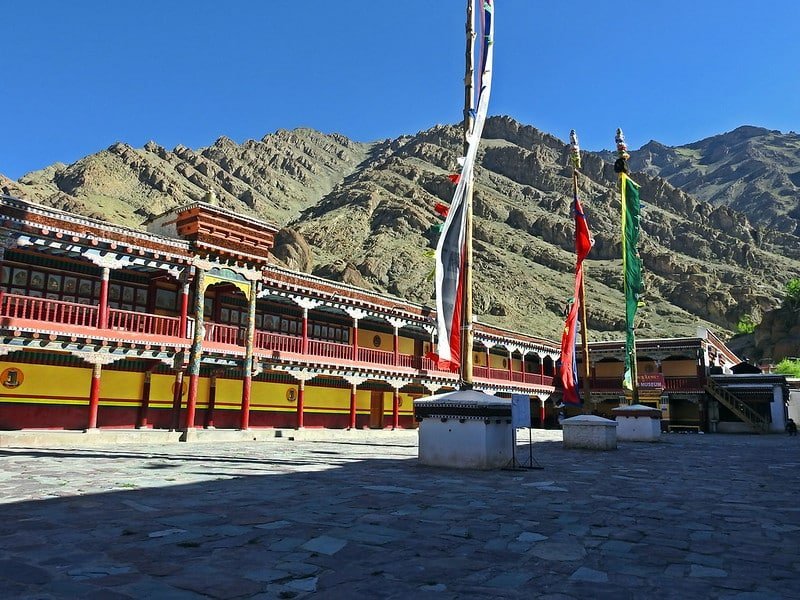
Hunderman sits on the Line of Control. Abandoned during the Kargil War in 1999, the village was left exactly as it was when residents fled. A family returned afterward and converted the abandoned houses into an open-air museum. You walk through rooms left mid-use, tools on walls, hearths, traditional furniture and see what daily life in a LOC village looked like before 1999. In autumn, the poplars around the abandoned structures are gold against dry stone walls. Photography here is unlike anywhere else in Ladakh.

Kargil Town and Apo Bazaar
Kargil town sits at the confluence of the Suru and Drass rivers. The Apo Bazaar dates back to the days of Silk Route trading. The market is narrow, covered, and lined with shops selling dry apricots, walnut kernels, local honey, Pashmina wool, and copper artifacts. In autumn, produce stalls overflow with freshly harvested apricots (dried and fresh), walnuts still in their green husks, and Ladakhi apples smaller and sharper than commercial varieties.
Walk through the bazaar in the morning when vendors are setting up. The smell of drying apricots and roasting walnuts is specific to this season and this place.

Suru Valley
The Suru Valley runs south from Kargil toward Zanskar. In autumn, the poplars along the Suru River turn yellow in long corridors. The apricot orchards above the villages go copper and orange. Nun (7,135 m) and Kun (7,077 m), the highest peaks in the Ladakh range, stand at the valley’s head, snow-covered against blue sky, framed by golden trees below.
Suru remains largely a secret to the outside world. The autumn drive from Kargil into the valley, past the Suru River, through Panikhar and the surrounding villages with the Nun-Kun massif growing larger ahead of you, is the defining experience of an autumn Kargil trip.
Key villages: Parkachik (views of Nun-Kun glacier), Panikhar (trekking base, river confluence views), and traditional farming villages where the harvest is underway through October and November.

Aryan Valley and Batalik Sector
The Batalik route from Kargil to Leh follows the Indus River through a different landscape than NH1. The Aryan villages, Garkon and Darchik are inhabited by Brokpa, a distinct ethnic group with flower-decorated headdresses and their own cultural practices separate from both Kashmiri and Ladakhi culture. Their dress, dance, and village architecture are specific to this valley.
In autumn, the Indus Valley here is gold-and-orange against brown rock. Terraced apricot orchards drop down to the river. The contrast between the working orchards and the dramatic Karakoram peaks behind Batalik is the most photogenic section of the entire circuit.
Crossing Himbotingla Pass (13,700 feet) gives you views across the Indus Valley. The descent to Garkon and Darchik takes you into a warmer, sheltered pocket of the valley.
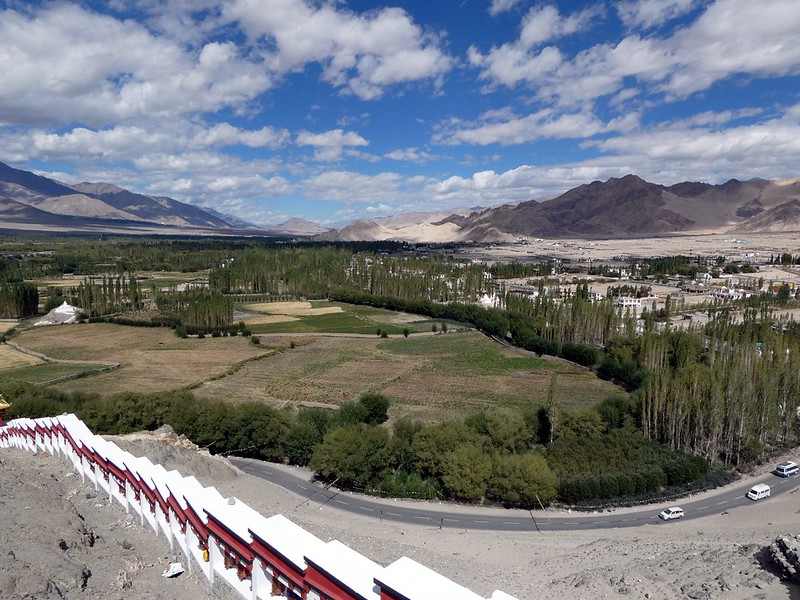
Lamayuru Monastery
One of the oldest monasteries in Ladakh, with parts dating to the 11th century. It sits above the Moonland formations, visible from the highway for kilometers before you reach it. In autumn, the pale eroded terrain and the ancient monastery against a clear sky is one of the most dramatic photographs in Ladakh.
The return drive via Fotu La and Namika La gives panoramic views of the mountain ranges on both sides of the watershed before the descent into the greener Kashmir valleys and the crossing of Zoji La back to Srinagar.
The Kashmir–Ladakh Autumn Bliss: 6-Day Itinerary
This is the Kashmir–Ladakh Autumn Bliss – a 6-day private tour from Srinagar to Srinagar, designed specifically around the autumn season. Starting from ₹27,000 per person.
Day 1: Arrival in Srinagar | Autumn in Dachigam
Arrive in Srinagar and settle in. Later, visit Dachigam National Park, one of the best places to experience Kashmir’s golden autumn landscapes. Enjoy the changing colors of chinar and mountain forests before returning to Srinagar for an overnight stay. Overnight: Srinagar
Day 2: Drive to Kargil
You will drive toward Kargil through some of Kashmir’s most spectacular mountain scenery. Along the way, you will visit Sonamarg with its vibrant autumn meadows, cross the dramatic Zoji La Pass into the Drass Valley, stop at the Kargil War Memorial, explore the historical Hunderman Border Village, and take in traditional mountain villages along the route.
Day 3: Suru Valley Autumn Exploration
You will spend a full day exploring the Suru Valley, which is surrounded by the highest peaks of the Ladakh range. During the journey, you will follow the Suru River, visit Panikhar and its neighboring villages, take in views of the majestic Nun-Kun Massif, admire the autumn-colored fields and poplar groves, and immerse yourself in the peaceful atmosphere of traditional Suru Valley villages before returning to Kargil for the night.
Day 4: Kargil to Aryan Valley | Batalik Sector
You will drive toward the Aryan Valley and Batalik sector along the banks of the Indus River. The route takes you over Himbotingla Pass at 13,700 feet, through the Aryan villages of Garkon and Darchik, and past golden terraced fields. You will also experience traditional Brokpa culture and architecture, visit Chiktan Fort, and explore Bodhkharbu Monastery.
Day 5: Aryan Valley to Sham Valley | Monasteries and Autumn Landscapes
You will continue toward Sham Valley, combining Ladakh’s rich Buddhist heritage with scenic autumn landscapes. Highlights of the day include visiting Likir Monastery, enjoying a local pottery or farm experience in Likir village, exploring Alchi Monastery, the 11th-century site featuring the oldest murals in Ladakh and traveling through traditional Indus Valley villages.
Day 6: Sham Valley to Srinagar | Across the High Passes
You will begin the return journey through Ladakh’s most dramatic high-altitude landscape. Along the way, you will visit Lamayuru Monastery, view the unique Moonland landscape, cross Fotu La Pass at 13,478 feet and Namika La Pass at 12,139 feet, pass back through the Kargil region, and cross Zoji La Pass while surrounded by autumn scenery.
Arrive in Srinagar by evening, completing the Kashmir-Ladakh Autumn circuit.
- What’s Included: Breakfast and dinner daily | All transfers airport to airport (sedan or SUV based on group size) | Driver lodgings and expenses | Road tolls, fuel, and cab charges | Guesthouse/Homestay/Hotel accommodation
- What’s Excluded: Travel insurance | Lunch and snacks | Park tickets and camera fees | GST | Inner Line Permits | Anything not mentioned in inclusions
- Book this tour: Kashmir–Ladakh Autumn Bliss → Call/WhatsApp Adil (Tour Expert): +91 70064 13075
Is Kargil Safe to Visit?

It is absolutely safe to visit Kargil. Most people hesitate thinking of its proximity to a conflict zone. In fact, there is no overwhelming army presence that frisks locals, sets up checkpoints every kilometer, or guards the town with automatic weapons. The town functions normally.
People of Kargil are extremely friendly and hospitable, even when you are not engaging with them for any transaction. As a traveler exploring on your own, the hospitality is genuine. Women participate fully in daily life in Kargil, from running shops to taking part in outdoor activities. The town is not averse to solo travelers of any kind.
The area around the LOC (Hunderman, Batalik) requires standard awareness and following local guidance, but Kargil town, Suru Valley, and the main tourist circuit are unrestricted civilian areas.
People and Culture

Kargil is predominantly Shia Muslim, distinct from both Ladakh’s Buddhist communities and Kashmir’s Sunni majority. The town’s religious identity reflects its history as a Silk Route trading post where Persian, Central Asian, and Buddhist cultural streams all passed through.
In autumn, the harvest is also a social time. Families pick apricots together. Walnuts are beaten down from the trees with long poles. Drying apricots cover the flat rooftops in orange and amber. If you walk through the orchards with a guide, families will offer tea and let you taste freshly picked fruit. The hospitality is the same hospitality that sustained Silk Route merchants for centuries.
Locals are in all praise for Indian armed forces. “They built us hospitals and schools. Indian Army is very helpful,” is the consistent sentiment from Kargil residents, a reflection of how the town has moved forward from the 1999 conflict.
Practical Information

- Getting to Kargil: From Srinagar: 204 km via NH1 through Sonamarg and Zoji La, 5-6 hours. From Leh: 220 km via NH1, 4-5 hours. Shared taxi from Srinagar: ₹500-800 per person. Private taxi: ₹3,500-4,500 one way.
- When to Go: September 15 to October 15 is the ideal autumn window. Colors peak in late September to early October. By mid-October temperatures drop sharply and some trees have shed. Zoji La Pass can get early snowfall in late October, check road conditions.
- Where to Stay: Kargil has limited but functional accommodation. PC Palace is one of the few hotels open 12 months a year. Other options: Hotel Greenland, Hotel Highland, Siachen View. Budget guesthouses: ₹800-1,500 per night. Book in advance for September-October.
- What to Carry: Layers for cold mornings and evenings (5-10°C) and comfortable midday temperatures (15-20°C). A windproof jacket is essential. Camera with wide-angle lens for valley shots. Cash – ATMs in Kargil are present but can run out.
- Permits: No special permit required for Kargil town, Drass, Suru Valley, or the standard tourist circuit. The Batalik sector (Aryan villages, Himbotingla Pass) may require army checkpoint registration, your driver handles this. Inner Line Permits are excluded from the package and processed separately if needed for any restricted areas.
Why Autumn Kargil Works as a Separate Trip
Most people think of Kargil as Day 2 on the Srinagar-Leh highway. That’s wrong framing. Kargil in autumn is a destination, not a transit point.
The combination is specific: Silk Route history, Kargil War context, Shia Muslim culture, Dard-Aryan villages (Batalik), Suru Valley scenery (Nun-Kun backdrop), ancient Buddhist cave monasteries, LOC village museum (Hunderman), Dachigam National Park autumn forests, the Sham Valley monastery corridor (Likir, Alchi), and the dramatic return via Lamayuru and high passes, all in 6 days, Srinagar to Srinagar.
No other destination in Ladakh gives you this particular combination. Leh gives you Buddhist monasteries and high-altitude lakes. Kargil gives you all of that plus the war history, the cultural diversity, the Silk Route trading past, and October orchards that don’t exist at Leh’s altitude.
Come for the color. Stay for everything else Kargil turns out to be.
Book the Kashmir–Ladakh Autumn Bliss Tour
Cliffhangers India runs the Kashmir-Ladakh Autumn Bliss tour from mid-September to mid-October. The 6-day private circuit covers Dachigam, Sonamarg, Drass, Kargil, Hunderman, Suru Valley, Batalik, Aryan Valley, Sham Valley (Likir and Alchi), and the return via Lamayuru and the high passes.
Starting from ₹27,000 per person. Includes transport, accommodation, breakfast and dinner, and all driver expenses.
To book or customize: Call/WhatsApp Adil (Tour Expert): +91 70064 13075 Email: info@cliffhangersindia.com Book online:
For group discounts, custom duration, or changes to accommodation, contact Adil directly. The tour runs on private vehicles (sedan up to 3 guests, SUV for larger groups).
Zanskar Valley Long Tours

11D/10N

14D/13N
10D/9N
11D/10N
 Call Now
 Chat With Us
FAQ's
When is the best time to visit Kargil for autumn colors?
Mid-September to early October is the peak window. Poplar trees along the Suru River and apricot orchards above the villages are in full color by late September. By mid-October temperatures drop and some trees begin shedding. The last two weeks of September and first week of October are the sweet spots.
Is Kargil safe to visit for tourists?
Yes. It is absolutely safe. People of Kargil are extremely friendly and hospitable. The town operates normally. The Suru Valley, Drass, Batalik, and the main tourist circuit are all unrestricted civilian areas.
How do I get to Kargil from Srinagar?
204 km via NH1 through Sonamarg and Zoji La Pass. Driving time: 5-6 hours. Shared taxi from Srinagar: ₹500-800 per person. Private taxi: ₹3,500-4,500. Alternatively, book the 6-day Kashmir-Ladakh Autumn Bliss tour and transport is fully handled from Srinagar airport.
How many days is enough for Kargil?
The Cliffhangers Kashmir-Ladakh Autumn Bliss covers the complete circuit in 6 days, Srinagar to Srinagar. This includes Dachigam, Drass, Kargil, Suru Valley, Batalik, Aryan Valley, Sham Valley, and return via Lamayuru. A standalone Kargil trip needs at least 4 days.
What is there to see in Kargil beyond the War Memorial?
The War Memorial at Drass is one stop in a much larger circuit. The full autumn Kargil experience includes: Dachigam National Park autumn forests, Sonamarg meadows, Hunderman Museum Village (LOC village), Suru Valley with Nun-Kun views, Batalik Aryan villages, Likir Monastery, Alchi Monastery (oldest in Ladakh), and Lamayuru on the return.
What makes Kargil different from Leh in autumn?
Kargil sits lower (2,676 m vs Leh’s 3,500 m), which means denser vegetation, more orchards, and a more dramatic color change. The cultural mix, Shia Muslim, Dard-Aryan, Buddhist is different from Leh’s predominantly Buddhist character. The Silk Route history, Kargil War context, and Suru Valley scenery don’t exist anywhere else in Ladakh.
Can I visit Kargil in October?
Early October is excellent. Temperatures are cooler (5-15°C) but colors are often most vivid. By mid-October, Zoji La Pass receives early snowfall. The Kashmir-Ladakh Autumn Bliss tour runs through mid-October, contact Cliffhangers to confirm availability for your specific dates.