
Rock Climbing in Suru Valley, Ladakh
Most people drive through Suru Valley on their way to Zanskar. They see the Nun-Kun peaks, stop for a photograph, and keep going. The boulders had been sitting there undocumented, unclimbed, and unnoticed for as long as anyone could remember.
In 2025, National Geographic named Suru Valley one of the 25 best travel destinations in the world – specifically calling it “the world’s next big climbing hotspot.” The Suru Outdoor Fest, which grew from that first small gathering in 2016, won the UIAA Rock Climbing Festival Award in 2019 and now draws 250 participants from 20 countries every August-September.
With Cliffhangers India, you are going to experience the hidden magic of Suru Valley. Scroll down to find out more!
What is Rock Climbing in Suru Valley
Suru Valley sits in the Kargil district of Ladakh, drained by the Suru River – a tributary of the Indus. The valley runs between Kargil in the north and Pensi La in the south, with Sankoo (40 km from Kargil) as the main climbing hub.
The boulders lie scattered at the base of the valley. Pick any compass point, walk, and you will dead-end at a block. The rocks here are granite. Here you will be able to witness open meadows, willow trees, and the Suru River running cold and fast below Nun-Kun.
There are about 6 dedicated climbing areas in Suru with 300 problems, grades varying from 5C to 8A+. National Geographic now cites 500 boulder problems across the valley’s established crags. And Jamyang himself says that’s probably 1-2% of what the valley actually contains.
The climbing here is primarily bouldering. But the valley also has untapped potential for trad climbing, alpine routes on Nun-Kun, and big-wall lines that haven’t been touched. Suru is at an early stage of development – which is the reason to go now, not later.
- 6 established climbing areas, centered around Sankoo village
- 500+ documented boulder problems, grades from 5C to 8A+
- Rock type: Granite – steep roofs, technical vertical faces, highballs
- Base altitude: 9,700 feet (2,957 m) – lower than Leh, manageable acclimatization
- Established by: Jamyang Tenzing and Suhail Kakpori, first documented 2010-2012, festival launched 2016
Popular Ladakh Tours


7D/6N
8D/7N

6D/ 5N
10D/9N
The Climbing Areas
Oasis
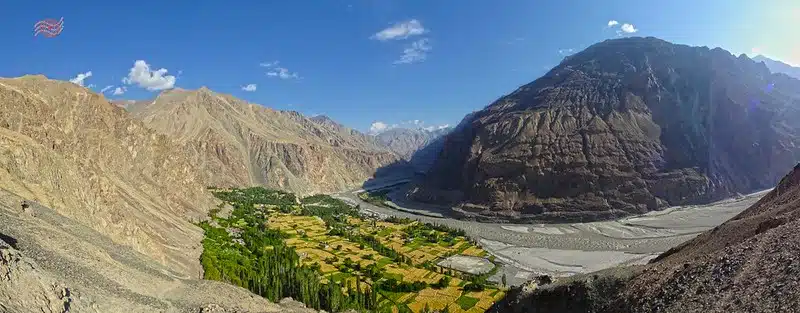
The Oasis area at Sankoo is the most developed and most accessed crag in Suru Valley. It’s the first place most visiting climbers go, and the place where the majority of Suru Fest sessions happen. Named for the shade and water nearby – a rarity on Ladakh crags. Most climbing sites are established around Sankoo village.
- Problems across the full grade spectrum: beginner-friendly lines alongside V7+ projects
- Walking distance from the Sankoo campsite
- Shade in the morning; exposed to afternoon sun
- Best visited early morning or late evening in August-September

Quantum
Quantum is a separate area within the valley – listed on Mountain Project but less documented than Oasis. The name suggests it’s a newer development, likely accessed during the later years of Suru Fest when the main Oasis area became more familiar. Quantum represents the direction Suru is heading, outward from Sankoo into less-explored sections of the valley.
- Less documented than Oasis
- Expect fewer fixed problems and more exploration potential
- Best for climbers who want undeveloped rock rather than established problems
Paradise Crag
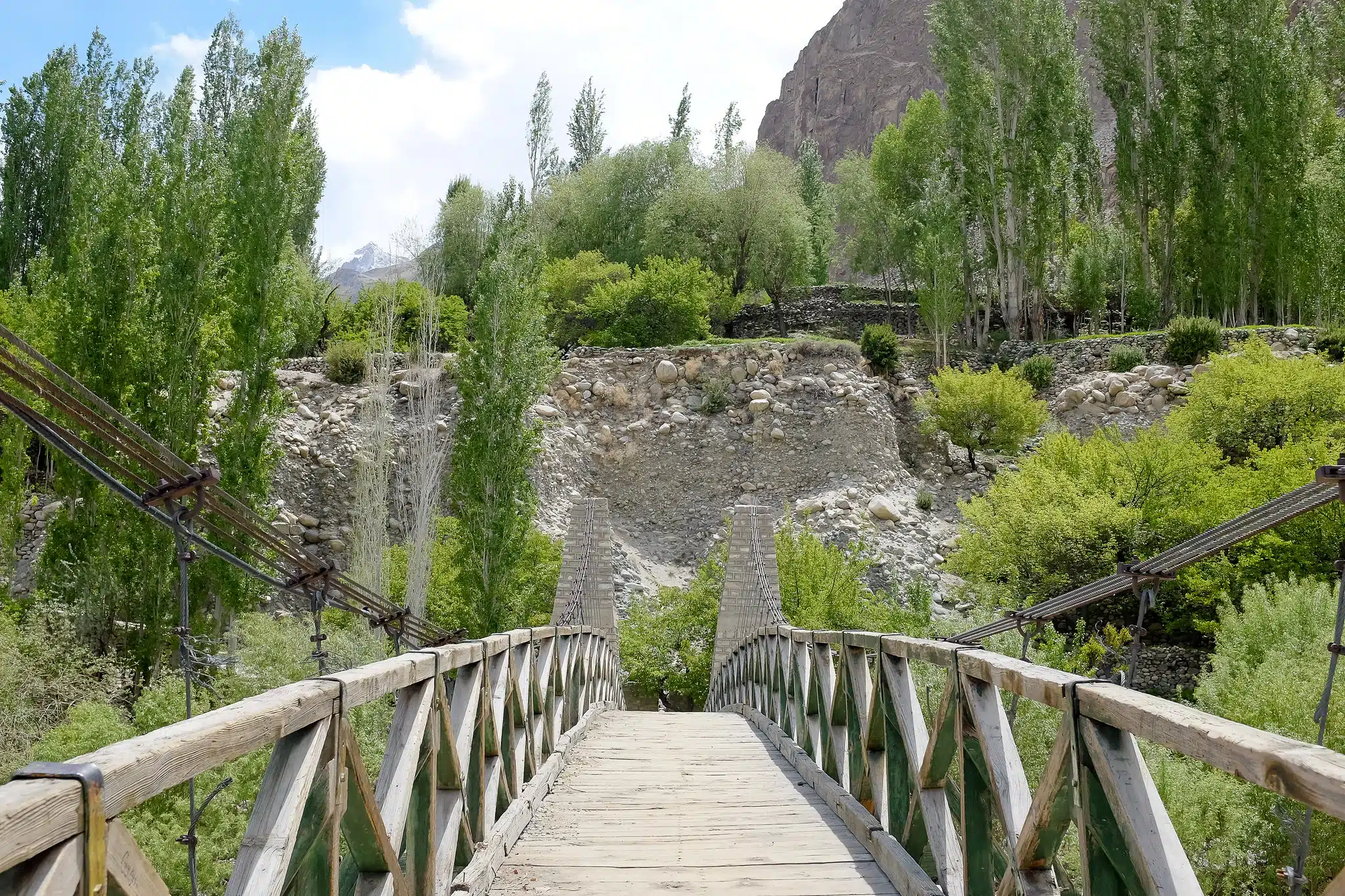
Boulderers have frequented the Paradise Crag in Suru Valley since 2016. Named by the local climbing community, Paradise Crag is one of the focal points of the annual Suru Outdoor Fest sessions. The crag offers a mix of bouldering lines with classic moderate problems that bring climbers back repeatedly.
- One of the most photographed crags in Suru Valley
- Mix of moderate and hard problems
- Active during Suru Outdoor Fest, good for meeting other climbers and getting beta
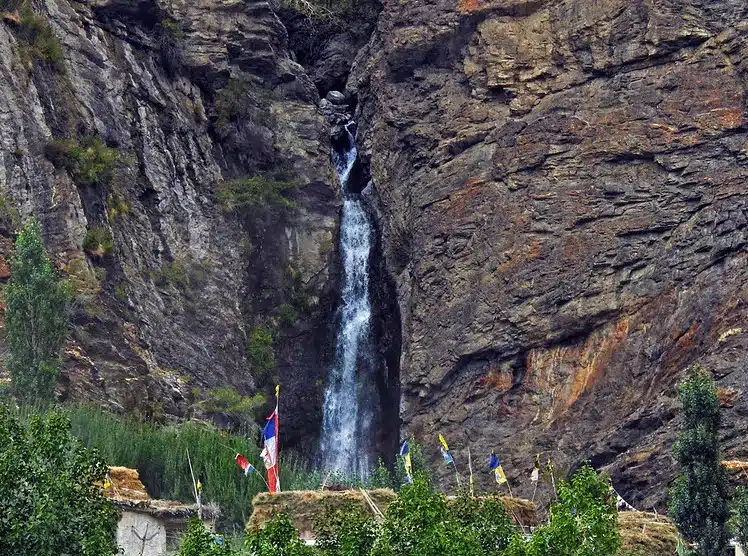
Meadow Boulder Area
Rock climbers warm up before sessions to scale the Meadow Boulder, large boulder in an open meadow section of the valley. The meadow setting makes this one of the more accessible and visually striking crags. Flat ground, views of Nun-Kun, and easy access from the road.
- Open meadow setting with Nun-Kun peaks as backdrop
- Good for full-day sessions, varied aspects, multiple problems in close proximity
- Accessible directly from the road

Upper Valley Areas (Rangdum and beyond)
“Suru Valley is huge. I think we have just explored one to two percent of climbing. Our current campsite is at a lower altitude. Rangdum at 4,000 metres has no road access and climbers need acclimatization,” says Jamyang.
The upper valley – toward Rangdum and Pensi La, is largely unexplored from a climbing perspective. Rangdum Monastery sits on a flat plain surrounded by open terrain at 4,000 m.
- Altitude (4,000 m+) requires proper acclimatization
- No road access to some sections, approach on foot
- Best for experienced climbers looking for first ascents
Suru Outdoor Fest: The Annual Climbing Festival
The Suru Outdoor Fest is the reason most climbers hear about Suru Valley. Started in 2016 as a small bouldering gathering by Jamyang Tenzing and Suhail Kakpori, it has become South Asia’s premier outdoor adventure festival.
The festival won the UIAA Rock Climbing Festival Award in 2019 and now draws 250 participants from 20 countries. It has grown to include bouldering, highlining, kayaking, mountain biking, trail running, BASE jumping, slacklining, yoga, and longboarding.
Suru Outdoor Fest 2026 runs September 10 to September 25 in Suru Valley, Ladakh.
The festival operates from a base camp near Barsoo village in lower Suru. Tent accommodation, vegetarian food, shared facilities. The campsite wakes up to views of the valley and Nun-Kun in the distance.
Bouldering vs Alpine Climbing in Suru Valley
Suru Valley currently operates primarily as a bouldering destination. But it’s surrounded by one of the most dramatic alpine environments in India, and trad climbing development is beginning.
- Bouldering: Dedicated climbing areas, 300+ problems, grades from 5C to 8A+ now expanded to 500+ documented problems. The festival context means most problems have beta available from local climbers and other visitors.
- Alpine Routes – Mt. Nun and Mt. Kun: Nun (7,135 m) and Kun (7,077 m) are the highest peaks in the Ladakh range and visible from throughout Suru Valley. The base camp for Nun-Kun expeditions is at Tangole, 77 km from Kargil. These are serious Himalayan climbs requiring mountaineering experience, permits from the Indian Mountaineering Foundation (IMF), and full expedition logistics.
- Trad Climbing – Emerging: Apart from bouldering, there is huge untapped potential for big-wall trad climbing. The valley walls and rock formations above the established bouldering crags have unclimbed crack systems and faces.
- Rock Climbing at Panikhar: Tai Suru/Panikhar, at 70 km from Kargil on the Padum-Zanskar road is the base for adventure activities including mountaineering, rock climbing, river rafting, and trekking.
Grades and What to Expect
| Fontainebleau | V-Scale | What it means in Suru |
| 5C–6A | V3–V4 | Beginner-intermediate. Accessible to most fit people with basic technique. Many problems at Oasis and Paradise Crag. |
| 6B–6C | V4–V5 | Intermediate. Requires established bouldering technique and body tension. |
| 7A–7B | V6–V8 | Advanced. Most festival participants operate in this range. |
| 7C–8A | V9–V11 | Expert. Problems in this range are the festival “projects” — few people send them. |
| 8A+ | V12+ | Professional level. Suru’s hardest problems. |
- Rock character: Granite. Suru granite is featured by rough texture (good friction), sharp edges (aggressive on fingers until skin toughens), and a mix of movement styles. Steep roofs test upper body and core. Vertical technical faces reward footwork and balance. Highball problems require mental commitment as much as physical ability.
- Acclimatization: The main climbing areas sit around 9,700 feet (2,957 m). This is lower than Leh (11,500 ft) and manageable for most people after 1-2 days in the area. Coming from sea level directly, give yourself 2-3 days before projecting hard problems. If you’re arriving from Leh, acclimatization isn’t a major concern.
How to Reach Suru Valley for Climbing
From Leh:
Taxis from Leh take seven hours to reach Sankoo (one-way ₹7,500 plus ₹500 for overnight; ₹1,500 per person in a shared taxi).
Route: Leh → Kargil (220 km, 5 hours) → Sankoo (40 km, 1 hour). Total: approximately 7 hours.
From Srinagar:
Route: Srinagar → Kargil (204 km, 6 hours via NH1, through Sonamarg and Zoji La) → Sankoo (40 km, 1 hour). Total: 7 hours.
From Manali (Road Trip):
If driving up, avoid the Kashmir valley and come via Delhi-Manali-Leh-Kargil. Allocate at least five days. Top up fuel at Manali and carry at least 10 litres in a jerry can. Avoid filling up at Tandi (last petrol pump after Manali) as the fuel quality is inferior.
Manali → Leh (475 km, 2 days via Manali-Leh highway) → Kargil (220 km, 5 hours) → Sankoo.
By Public Transport:
Both buses and taxis are available from Kargil to Sankoo. Buses run on irregular schedules. Shared taxis are more reliable. Sankoo is 35-40 km from Kargil – 1 hour on a paved road.
During the Suru Outdoor Fest: Transport from Leh to Suru and back is included in the festival package. This is the easiest way to handle logistics if your dates align (September 10-25 in 2026).
What to Pack for Rock Climbing in Suru Valley
Climbing-specific gear:
- Climbing shoes
- Chalk bag and chalk
- Crashpad
- Mangar during the festival
- Brush for cleaning holds
- Headlamp for early morning or late sessions
Clothing:
- Layers
- Wind jacket
- Sun protection
- Finger tape
Camping and general:
- Sleeping bag rated to 5°C minimum (nights drop significantly)
- Headlamp and backup batteries (power cuts are common)
- Water bottles and purification tablets (river water needs treatment)
- Cash – no ATMs in Sankoo. Bring cash from Kargil or Leh. Kargil has ATMs.
- Medications for altitude, including Diamox if recommended by your doctor
What you can find locally:
- Basic food in Sankoo village
- Guesthouses (very basic)
- Fuel in Sankoo (petrol pump – fill up here before going further into the valley)
Where to Stay in Suru Valley
Sankoo is the base village for climbing. Accommodation is basic, this is a frontier climbing destination, not a developed tourism hub.
- Camping: The primary option during the Suru Outdoor Fest. Base camp near Barsoo village provides tent accommodation with shared facilities. Outside the festival, you can camp freely in meadows along the valley, carry your own tent and gear.
- Guesthouses in Sankoo: A handful of basic guesthouses operate in and around Sankoo. Clean rooms, simple meals, no-frills. Rates approximately ₹800-1,500 per night. Book in advance during festival dates, limited rooms fill up.
- Kargil: If you need more comfort, Kargil (40 km away) has better hotel options (₹1,500-3,000 per night). You can stay in Kargil and drive to the climbing areas daily, though this adds 2 hours of driving round-trip each day.
- Festival Package: The most convenient option for first-time visitors. Tent accommodation, meals, and transport all included. Contact surufest.com for current year registration.
Best Time for Rock Climbing in Suru Valley
- August to September: Peak Climbing Season This is when the Suru Outdoor Fest runs (September 10-25 in 2026). Weather is stable, temperatures are ideal (15-22°C during the day), and the climbing community is in the valley. August and September see clear skies after the monsoon clears. The rock is dry and in good condition.
- June to July: Pre-Festival Season The valley is accessible but the main climbing community hasn’t arrived. Good for those who prefer solitude. Some monsoon weather passes through in July, be prepared for occasional rain. The rock can be wet after rain but dries quickly at altitude.
- October: Last Window October is still possible but temperatures drop sharply by mid-month. Nights go below freezing. The festival is over and most visiting climbers have left. The valley empties out. Some dedicated climbers specifically come in early October for the quiet and the autumn light.
- November to May: Closed Heavy snowfall closes the valley. Kargil road from Zoji La may also close. Do not plan climbing trips in this window.
The best single window: September. Come for the Suru Outdoor Fest, when you have access to beta, local guides, community, and all established crags in their best condition.
Why Suru Valley is India's Most Important Climbing Development
How to Contact Crashpad Mangar / Suru Outdoor Fest
Crashpad Mangar is the local climbing club that manages crag development and the annual festival. They are the starting point for all climbing-related planning in Suru Valley. Festival registration and information: surufest.com Crashpad Mangar: Contact through the Suru Outdoor Fest website or through Cliffhangers India for introduction If you’re visiting outside the festival window, contact Crashpad Mangar in advance to:- Get current crag conditions and access information
- Arrange local guide and beta
- Confirm guesthouse availability in Sankoo
- Connect with other climbers who may be in the valley
Book Your Suru Valley Rock Climbing Trip with Cliffhangers
If you want to climb in Suru Valley with structured instruction, not just boulder independently, Cliffhangers India runs the Suru Valley Adventure Tour: a 5-day private climbing program from Srinagar and back, designed for people who want to learn rock climbing properly in one of the most dramatic mountain settings in Ladakh. Starting from ₹22,000 per person. The tour runs Srinagar to Srinagar over 5 days with 4 consecutive days of guided rock climbing at Parkachik in Suru Valley, directly below the Nun-Kun massif and the Parkachik Glacier. The climbing is progressive: Day 2 starts with fundamentals (equipment, knots, basic movement, belaying), Day 3 moves into advanced techniques (anchor systems, pitch climbing, rappelling), and Day 4 is almost entirely hands-on practice, lead climbing fundamentals, route reading, and applying everything learned under real Himalayan conditions.What the 5 days cover:
- Day 1: Srinagar to Suru Valley Drive through Sonamarg, Zoji La Pass, Drass Valley, Kargil War Memorial, Kargil town, and into Suru Valley. First views of the Nun-Kun massif. Arrive and settle in.
- Day 2: Parkachik: Introduction to Rock Climbing First day on rock. Climbing equipment, ropes, harnesses, carabiners, knots (figure-eight and basics), belay concepts, climbing commands, footwork and body positioning, basic movement on rock, safety procedures. Afternoon: light practical climbing to get comfortable with the environment.
- Day 3: Advanced Rock Climbing Techniques Advanced rope management, anchor building, anchor-system principles, pitch climbing, multi-pitch concepts, rappelling and abseiling, climbing protection placement, route reading. Theory, demonstration, and hands-on practice combined.
- Day 4: Advanced Rock Climbing Practice A full day on rock. Lead climbing fundamentals, pitch climbing practice, anchor setup, belaying, rappelling, efficient climbing movement, technical footwork, practical safety systems. Emphasis on controlled progression and confidence-building
- Day 5: Suru Valley to Srinagar Return through Kargil, Drass, and Zoji La to Srinagar. Tour ends.
To book or customise:
- Call/WhatsApp Adil (Tour Expert): +91 70064 13075
- Email: info@cliffhangersindia.com
- Book online: cliffhangersindia.com/tours/suru-valley-adventure-tour
Zanskar Valley Long Tours

11D/10N

14D/13N
10D/9N
11D/10N
 Call Now
 Chat With Us
FAQ's
Where exactly is rock climbing in Suru Valley?
The main climbing hub is Sankoo village, 40 km south of Kargil on the Kargil-Padum highway (NH301). All established crags, Oasis, Paradise Crag, Meadow Boulder Area are within walking or short driving distance of Sankoo. The valley itself runs between Kargil in the north and Pensi La (gateway to Zanskar) in the south.
Who discovered rock climbing in Suru Valley?
Jamyang Tenzing – a Leh-based climber – first explored Suru’s boulders in 2010 and 2012 with a small group. He and Suhail Kakpori founded the Suru Boulder Fest in 2016 (later renamed Suru Outdoor Fest), which put the valley on the international climbing map. The boulders were known to locals but undocumented as climbing terrain before 2010.
How many boulder problems are there in Suru Valley?
500+ documented problems across 6 established climbing areas, with grades from 5C (beginner) to 8A+ (expert/professional). Jamyang estimates this represents 1-2% of the valley’s actual climbing potential. New problems are being established every season.
What grade should I be climbing to enjoy Suru Valley?
Suru has problems for all levels. Beginner-intermediate climbers (V3-V5 / Font 5C-6B) will find plenty of accessible problems at Oasis and Paradise Crag. Most festival visitors operate in the V4-V8 range. Elite climbers come for the 7C-8A+ projects. The festival community is welcoming regardless of level.
Is the Suru Outdoor Fest worth attending?
Yes, particularly for first-time visitors. The festival provides transport from Leh, accommodation, meals, local guides, and beta on all crags, things that take significant time to arrange independently. The community aspect (climbers from 20 countries, skill-sharing, evening programs) adds value beyond the climbing itself. 2026 dates: September 10-25.
Can I climb in Suru Valley outside the festival?
Yes. The crags are accessible year-round in the climbing season (June to October). Outside the festival, contact Crashpad Mangar for current access information and to find local guides. The valley is quieter outside September, good if you prefer solitude, but you won’t have the festival community and infrastructure.
What is the rock type in Suru Valley?
Granite. The texture is rough, which is good for friction on slabs and provides positive edges. It is abrasive on skin, bring finger tape and expect callus development over a week of climbing. The granite produces a variety of movement styles: steep power problems on roofs, technical balance problems on vertical faces, and highball problems that test commitment.
Do I need a permit to climb in Suru Valley?
No permit is required for Suru Valley (Sankoo and surrounding areas) for Indian or foreign nationals. The valley falls within Kargil district and is freely accessible. Permits are only required if you venture into restricted border zones, which the climbing areas do not approach.
Is Suru Valley suitable for beginners?
Yes. The grade range – from 5C to 8A+ -covers beginner problems, and the festival format actively welcomes people who are new to bouldering. The low altitude (9,700 feet) compared to other Ladakh destinations also makes it more manageable. If you’ve never climbed outdoors but have some gym experience, Suru is a good first outdoor destination.
How is rock climbing in Suru Valley different from other Ladakh climbing?
Most Ladakh adventure activities happen at 14,000-18,000 feet. Suru’s main crags sit at 9,700 feet, dramatically lower. The rock type (granite), the established community, and the festival infrastructure make Suru a dedicated climbing destination rather than an add-on activity. It’s also the only place in Ladakh where the bouldering has been systematically developed with documented problems, grades, and local guides.