
20 Famous Places to Visit in Leh Ladakh for First-Time Travelers
Overview
Ladakh is a high-altitude cold desert. Brown mountains, turquoise rivers, flat-roofed villages, and Buddhist monasteries built into cliff faces. The landscape looks nothing like the rest of India. The air is thinner. The light is sharper. The distances between places are real distances, not hour-long drives but full-day journeys across passes that cross 17,000 feet.
There are three kinds of places to visit in Leh Ladakh. The lakes – Pangong Tso, Tso Moriri, Tso Kar are high-altitude bodies of water that shift color through the day in ways photographs don’t capture. The passes like Khardung La, Chang La, Taglang La, connect valleys and double as destinations. And the monasteries, Hemis, Thiksey, Alchi, Lamayuru are 11th and 17th century Tibetan Buddhist institutions still operating today, still teaching monks, still performing the same ceremonies they’ve performed for a thousand years.
Some places on this list require Inner Line Permits (Nubra Valley, Pangong, Tso Moriri, Hanle). Some are inside Leh town itself (Leh Palace, Shanti Stupa). Some are 6-8 hours away on rough roads (Turtuk, Puga Valley, Hanle). All of them are accessible between May and October when both highways are open.
This guide covers 20 places to visit in Leh Ladakh with exact distances, best time, entry fees, timings, and what you actually see when you get there.
Planning Ladakh? Check out these Places to visit in Leh
Popular Ladakh Tours


7D/6N
8D/7N

6D/ 5N
10D/9N
1. Leh Palace
- Location: Fort Road, Leh city
- Distance from Leh: 0 km
- Best Time: May to September
- Entry Fee: Free
- Timings: 9 AM to 5 PM
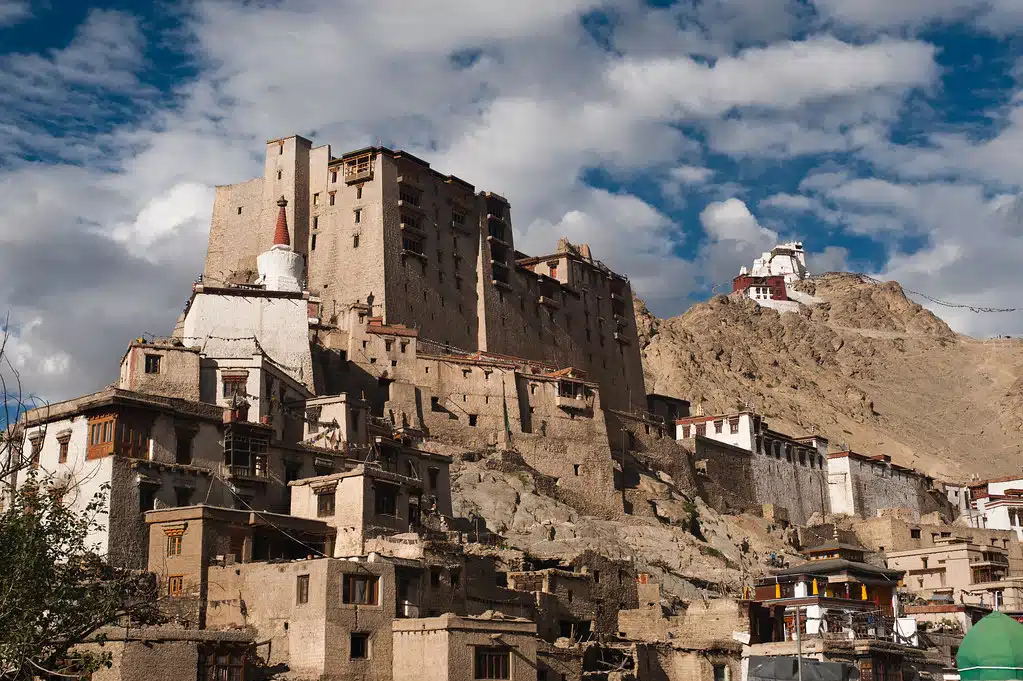
Leh Palace was built in the 17th century by King Sengge Namgyal, the same ruler who expanded Ladakh’s territory across neighboring kingdoms. The palace is nine storeys. Tibetan-Mughal architecture. The same family abandoned it in the mid-19th century when the Dogra army invaded and the royal household moved to Stok Palace across the valley.
What remains carved wooden beams, narrow stairways, painted doorframes, thick outer walls, tells you how deliberate this structure was. The Archaeological Survey of India maintains it now. Most rooms are bare. But the rooftop gives you the best view in Leh: the entire town spread below, the Indus Valley cutting through the landscape, and Stok Kangri peak rising in the southeast at 6,153 meters.
The leh palace is locally called Lachen Palkhar, Victory Palace in reference to King Sengge Namgyal’s military campaigns.
- Just behind and above Leh Palace is Namgyal Tsemo Monastery, combine both in a single morning visit. The walk between them takes 15 minutes uphill.
- Visit early morning for the best light and empty courtyards.
- The museum inside has a modest collection of religious artifacts and photographs of the royal family from the 19th century.
Capture breathtaking mountain views and remote monasteries as you walk through the trails of the Sham Valley Trek.
2. Shanti Stupa
- Location: Chanspa Hill, Leh city
- Distance from Leh: 3.5 km
- Best Time: April to September
- Entry Fee: Free
- Timings: 5 AM to 9 PM
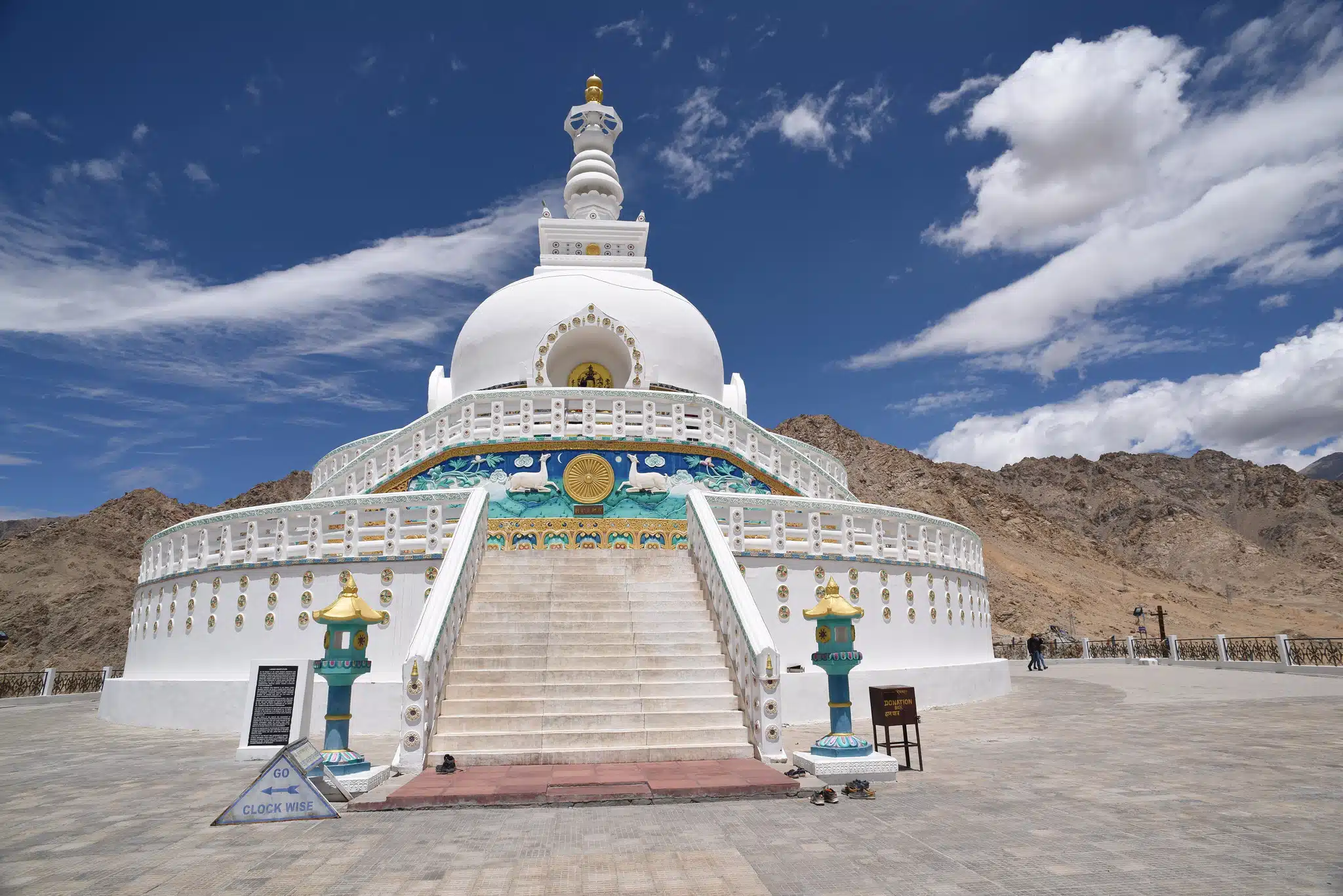
Shanti Stupa was built in 1991 by Japanese Buddhist monk Bhikshu Gyomyo Nakamura in collaboration with the Ladakhi Buddhist community. The white dome sits on Chanspa Hill at 11,841 feet, about 500 feet above Leh town. There are 504 steps from the road to the stupa. A motor road also goes around the back for taxis.
The white marble exterior has gold-painted reliefs around the base showing scenes from the Buddha’s life, his birth, enlightenment, first sermon, and passing. The Dalai Lama consecrated it in 1994. The stupa aims for peace, which is what the name means. From the top, the Zanskar Range runs along the south, Stok Kangri is visible to the southeast, and Leh town spreads below in every direction.
What makes it worth going early: sunrise turns the white dome gold and the surrounding mountains shift color as the light changes. It’s quiet before 8 AM. By 10 AM, tour groups arrive.
- Sunrise visits are most popular – walk up in the dark with a torch and arrive before the light comes over the mountains.
- The 504-step climb takes about 20-25 minutes at altitude. Go slowly.
- Open till 9 PM, evening visits are also excellent when the town lights come on below.
3. Nubra Valley
- Location: North of Leh, Nubra Valley region
- Distance from Leh: 105 km via Khardung La
- Best Time: April to September
- Entry Fee: Free (ILP ₹400 per person required)
- Timings: 8 AM to 6 PM
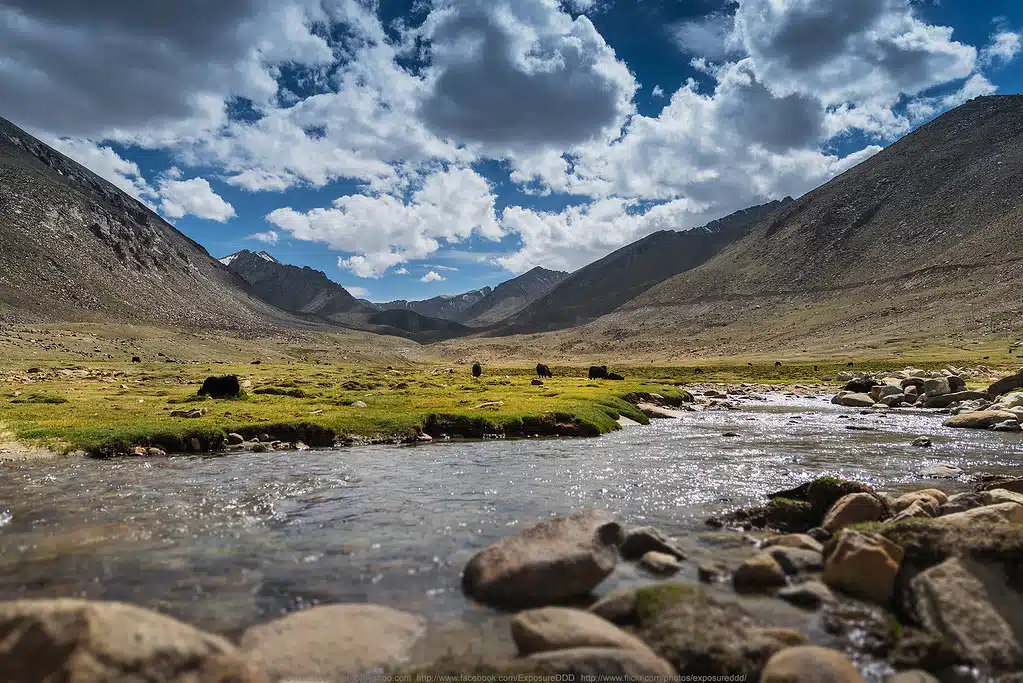
Nubra Valley sits across Khardung La Pass at 18,380 feet. The valley used to be called Ldumbra, Valley of Flowers. Today most people know it for the sand dunes at Hunder and the double-humped Bactrian camels that live there. The camels are descendants of the animals used on the Silk Route trading caravans, left behind when the trade routes changed.
The valley floor sits at around 10,000 feet, lower and warmer than Leh. Vegetation is denser. Orchards grow apricots and apples. The Shyok and Nubra rivers both run through it. The landscape is wide, flat, and sheltered by mountain ranges on all sides.
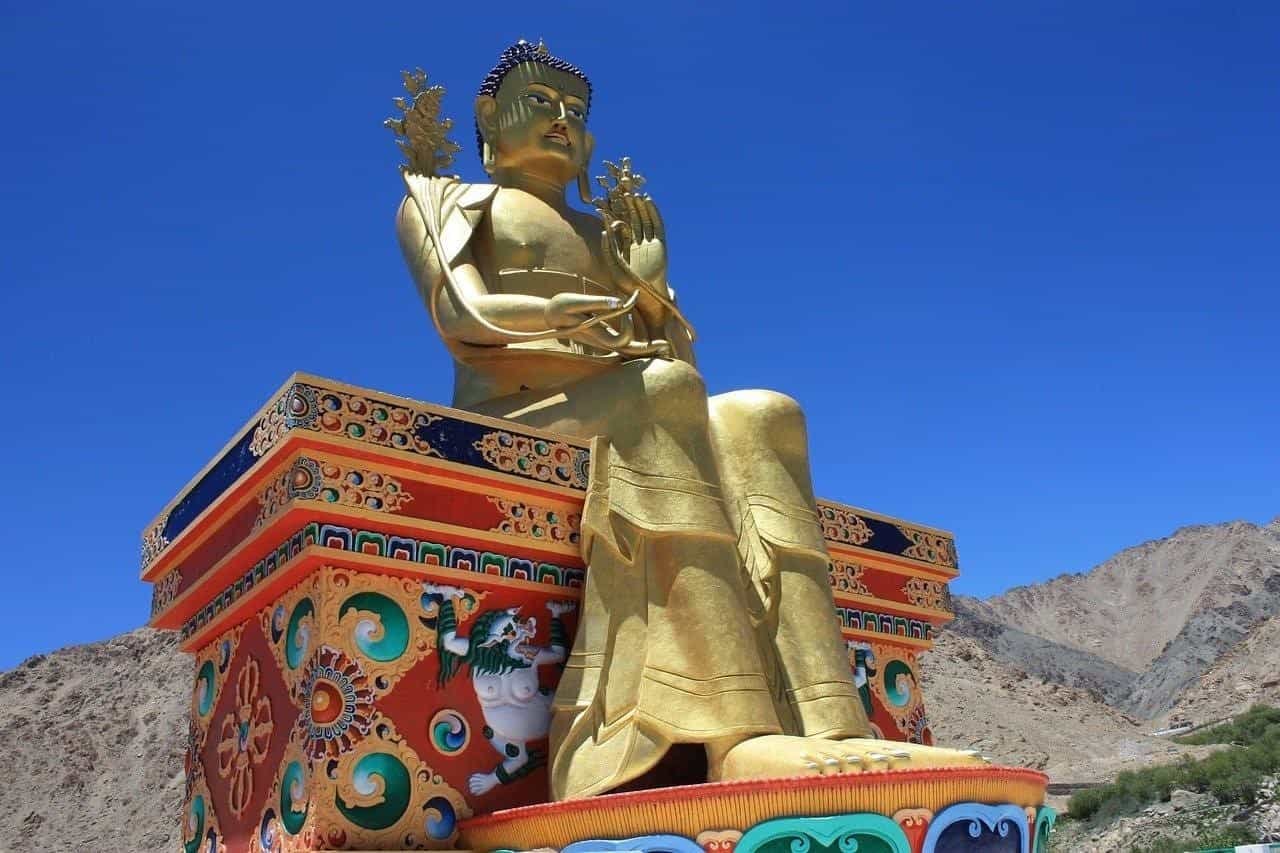
Key places inside the valley: Diskit Monastery (oldest and largest in Nubra, 14th century, with a 106-foot Maitreya Buddha statue), Hunder sand dunes and camel rides (30-45 minutes per ride), Samstanling Monastery near Sumur (less visited, better views), and Turtuk Village 90 km north (covered separately below).
- ILP is required – process at DC Office Leh or online at lahdcouncil.org/ilp before departure. Don’t rely on processing it at the checkpoint.
- Most people stay 1-2 nights in Diskit or Hunder and do Turtuk as a day trip on Day 2.
- The Khardung La descent into Nubra takes 1.5-2 hours. Go slow, the road is steep and the altitude affects driving.
4. Turtuk Village
- Location: Karakoram Range, northern Ladakh
- Distance from Leh: 205 km
- Best Time: April to October
- Entry Fee: Free
- Timings: 6 AM to 6 PM
Turtuk was part of Pakistan until 1971. After the Indo-Pak War, it came under Indian territory and remained closed to civilians until 2010. The village opened 39 years after the war ended.
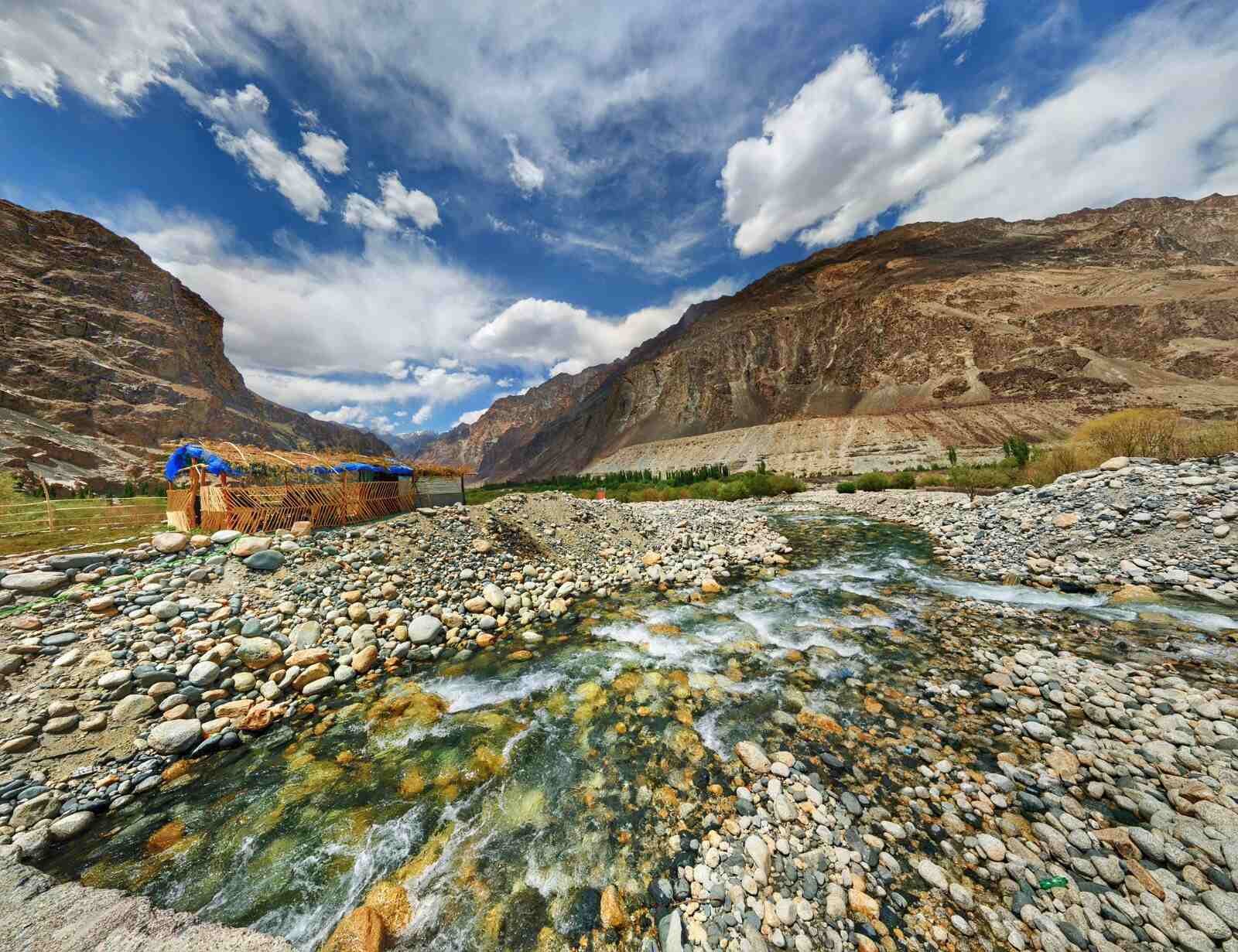
The people of Turtuk are Balti, a Muslim community who speak Balti, a Tibetic language with strong Persian influences. The culture is distinct from both Kashmiri and Ladakhi Buddhist culture. Traditional Balti stone-and-wood houses, apricot orchards on terraced hillsides, dried apricots on flat rooftops in summer. The Shyok River runs through the village. The local people are warm and direct, conversations about life on the Pakistan side of the border happen naturally if you show genuine interest.
The village has two parts, Youl Khar (lower) and Pharol (upper). The upper village has the old Balti royal house, now a small museum. The Yabgo family who ruled this region before 1971 still lives here and sometimes opens the house to visitors.
- Turtuk is 90 km north of Diskit in Nubra, most people base themselves in Diskit and do a day trip. Factor in 2.5 hours each way on a narrow road along the Shyok River.
- No additional permit beyond the standard Nubra ILP is required.
- Turtuk is one of the gateways to the Siachen Glacier area, you can see the Karakoram peaks from the upper village on clear days.
5. Pangong Lake
- Location: Pangong Tso region, eastern Ladakh
- Distance from Leh: 160 km via Chang La
- Best Time: June to September
- Entry Fee: Free (ILP ₹400 per person required)
- Timings: 9 AM to 6 PM
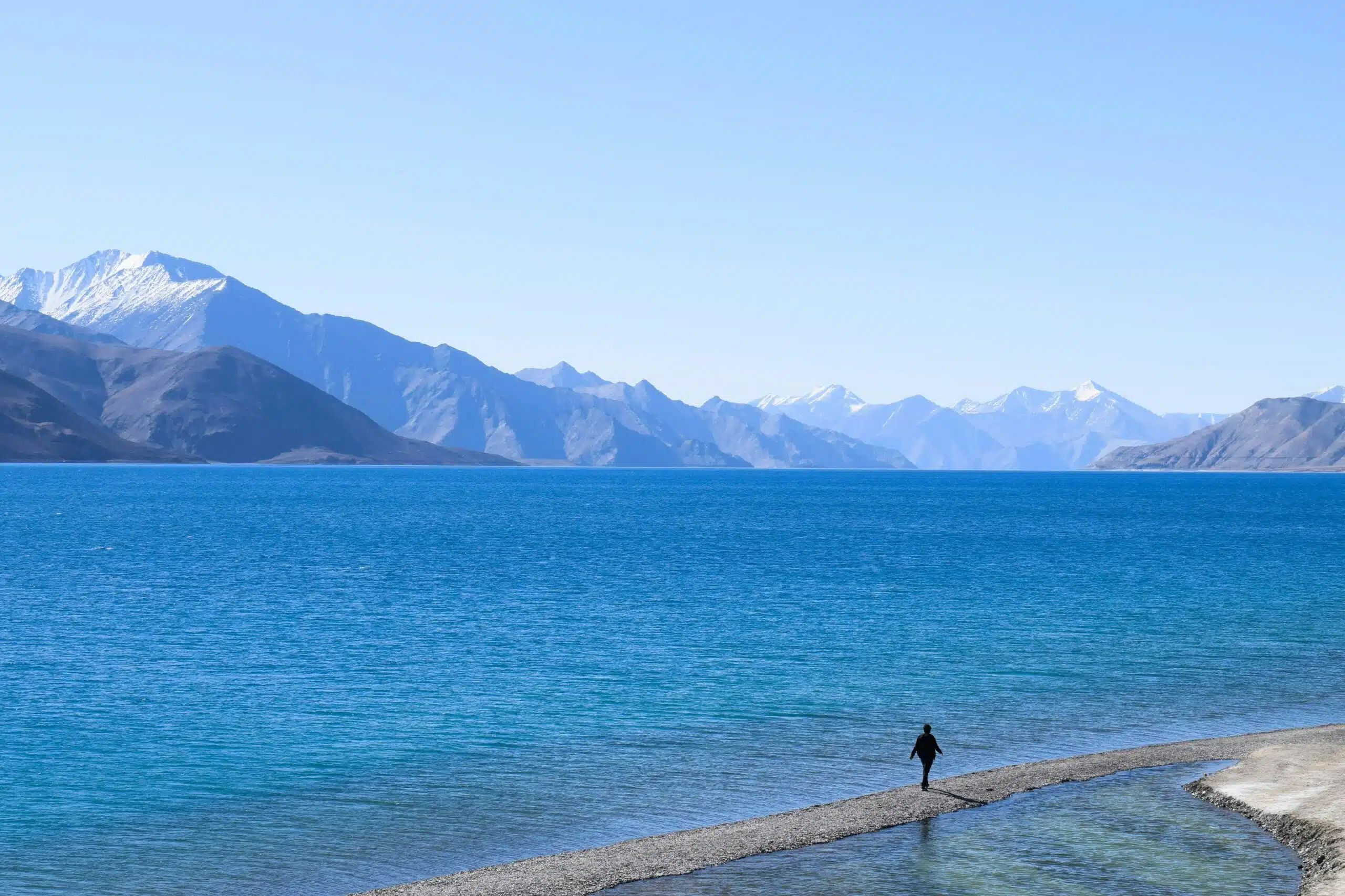
Pangong Tso is 134 km long and 5 km wide, sitting at 14,270 feet. Only 40% is in India, the rest is in China. You’re looking at an international boundary when you look across the lake.
The color is what stops people. Pangong Lake shifts between dark navy, turquoise, and green depending on time of day, cloud cover, and the angle of light. At sunrise it’s deep blue. By midday, turquoise. The bare brown mountains behind it create a contrast that photographs struggle to convey. The lake featured in the climax of Bollywood film “3 Idiots” (2009), which brought mainstream tourist attention. Before that, it was mainly trekkers and military enthusiasts who came.
The drive from Leh takes 5-6 hours via Chang La Pass at 17,590 feet. The road is mostly paved after the pass. Camping at the lake overnight is the right way to experience it, morning light before 6 AM on still water is different from arriving midday. Camp rates range from ₹2,500-6,000 per tent including meals.
- ILP required – process in Leh before leaving. Only groups with certified guides are allowed at Pangong. Your hotel or operator in Leh can arrange this.
- September is when the lake looks its clearest – post-monsoon skies sharpen the reflections.
- Camp overnight rather than driving back to Leh the same day, the morning is the point.
6. Tso Moriri Lake
- Location: Changthang region, eastern Ladakh
- Distance from Leh: 245 km
- Best Time: April to September
- Entry Fee: Free (ILP required)
- Timings: 7 AM to 5 PM
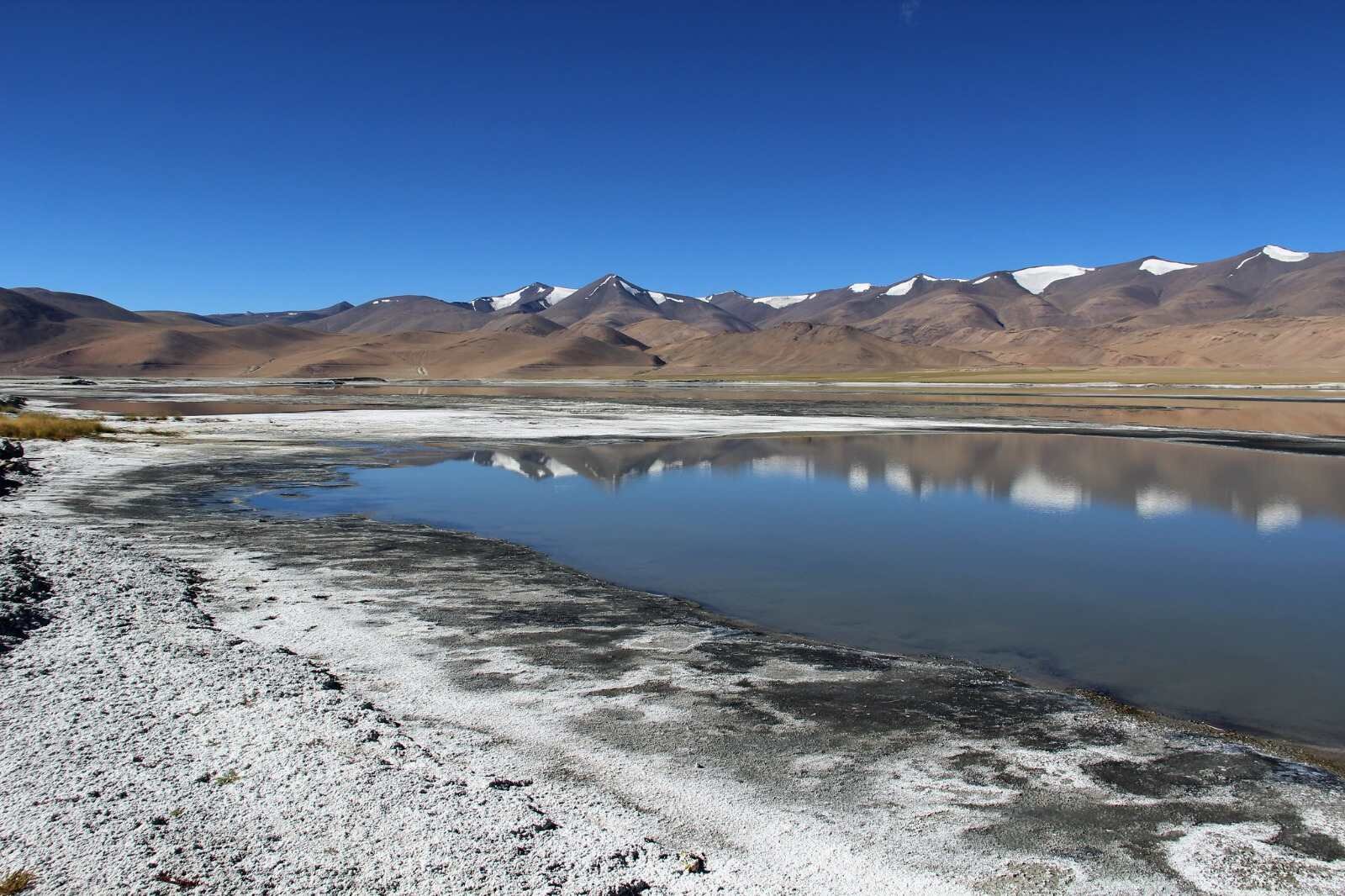
Tso Moriri is 29 km long and 8 km wide the largest high-altitude lake lying entirely within India. It sits at 15,075 feet in the Changthang Plateau. The surrounding landscape is open grassland, no trees, bare mountain ranges. The lake and its wetlands are a Ramsar site – internationally recognized for ecological significance.
What separates Tso Moriri from Pangong: fewer tourists and more wildlife. Black-necked cranes breed here. Tibetan wild ass (kiang) graze on the plateau. Bar-headed geese stop on migration. Himalayan marmots live in burrows near the banks. Korzok village on the western shore is the highest permanently inhabited village in India at 15,075 feet. Around 500 Changpa nomads live here, herding Changthangi goats whose wool becomes Pashmina.
The lake freezes solid from November to March. Some visitors come in winter for ice skiing, but the convenient window is April to September when the weather is stable and roads are accessible.
- ILP required for Indian nationals. Process in Leh.
- The drive from Leh takes 7-8 hours via Chumathang, plan to spend 2 nights, not 1.
- Korzok Monastery above the village dates to the 17th century and is worth visiting on Day 2 before returning.
7. Tso Kar Lake

- Location: Changthang Plateau, eastern Ladakh
- Distance from Leh: 170 km
- Best Time: June to October
- Entry Fee: Free
- Timings: 9 AM to 6 PM
Tso Kar means White Lake, named for the salt crust that forms around the edges when the water evaporates in summer. It’s a shallow, saline lake at 14,860 feet on the Rupshu Plateau. The contrast between the rugged plateau surrounding it and the clear water is what makes it worth stopping.
Like other high-altitude lakes in Ladakh, Tso Kar freezes in winter. The best time to visit is June to October when the surface is open and the surrounding grassland has color. Early mornings are best,the sun rises in the backdrop of mountains, creating a reflection across the still surface. There’s a smaller freshwater lake nearby called Startsapuk Tso where migratory birds concentrate.
Most people stop at Tso Kar on their way to or from Tso Moriri, the drive between the two lakes takes about 2 hours, making it a natural pause point.
- No permit required for Tso Kar – unlike Pangong and Tso Moriri.
- Early morning gives the best light – the mountain reflections in still water before wind picks up.
- No facilities here. Carry water, snacks, and all supplies from Leh.
8. Padum Zanskar
- cation: Zanskar Valley, Kargil district
- Distance from Leh: 420 km via NH301
- Best Time: May to September
- Entry Fee: Free
- Timings: 8 AM to 6 PM
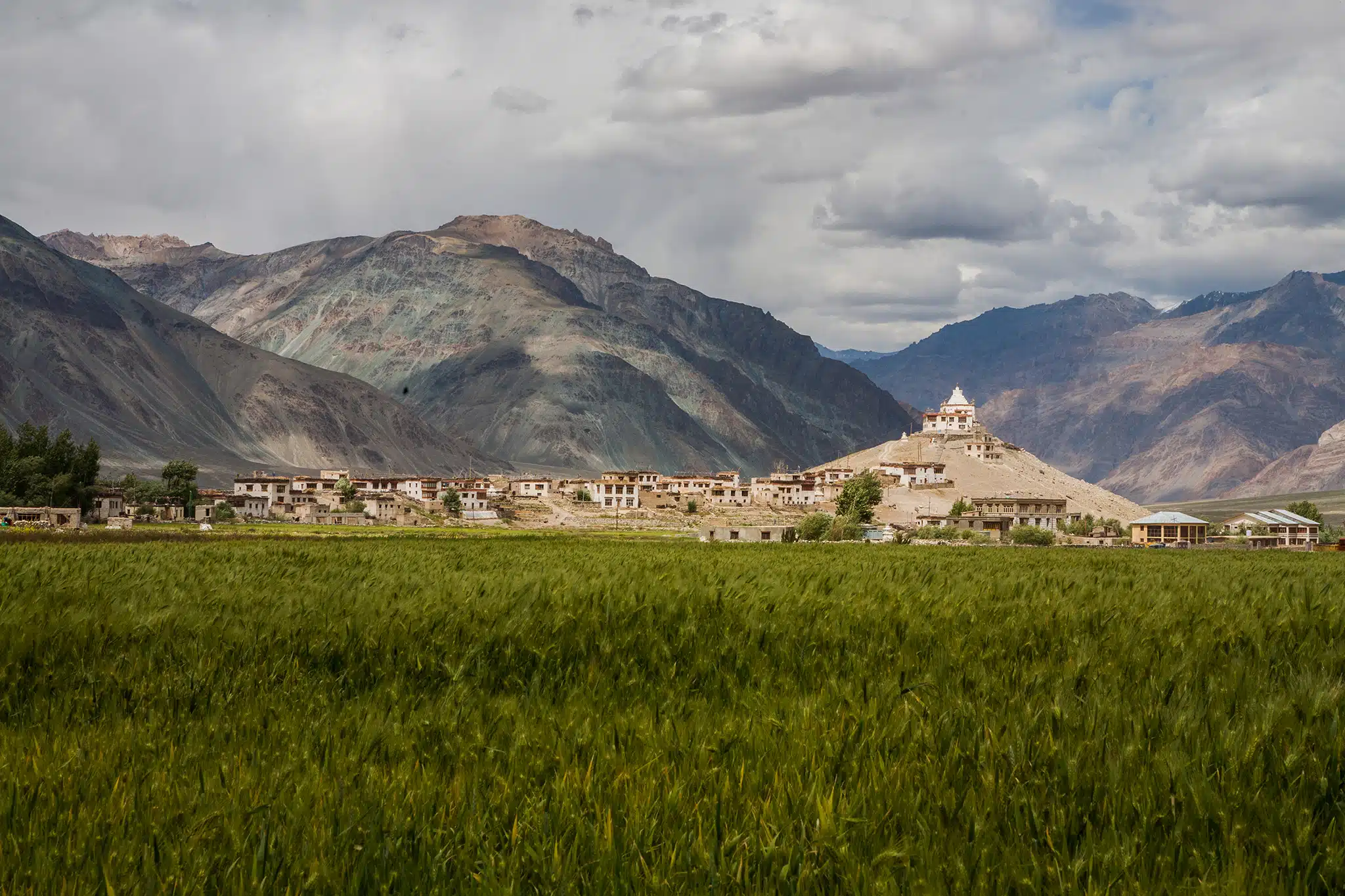
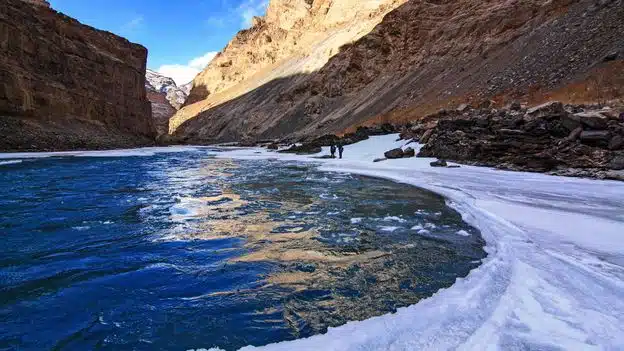
Padum is the administrative headquarters of Zanskar valley, that closes completely for six to eight months every year when snow blocks all roads. The only way in or out in winter is the Chadar Trek: walking on the frozen Zanskar River for 9-10 days. The rest of the year, three road routes connect it to the outside world.
Padum town itself is functional rather than picturesque. A market, police station, a few guesthouses, one petrol pump. The surrounding valley is where the interest lies. The Zanskar River runs through it and is used for river rafting, the Padum to Nimmu route through the Zanskar Gorge (7-10 days, Class III-IV rapids) is one of the best multi-day rafting trips in India.
Key places around Padum: Karsha Monastery (14 km, largest in Zanskar, 150 monks), Phugtal Monastery (60 km by road then 2 km on foot, built into a cliff cave in the 12th century, one of the most dramatic monasteries in Ladakh), Stongdey Monastery (18 km, 11th century, perched on a rocky outcrop 900 meters above the valley), Zangla village (45 km, royal village with a fort).
- The new NH301 from Leh via Nimmu and Zanskar Gorge has shortened the journey but it’s still 10-12 hours. Budget 2 full days for the drive with an overnight stop.
- Padum union taxi rules apply, a Leh or Kargil taxi cannot do local sightseeing inside Zanskar. You hire a separate Padum-registered taxi for valley routes.
- Phugtal Monastery is not to be skipped, the 2 km walk from Purne village through the gorge to reach it is part of the experience.
9. Drass Valley
- Location: Kargil district, on NH1
- Distance from Leh: 230 km
- Best Time: June to October
- Entry Fee: Free
- Timings: 8 AM to 6 PM
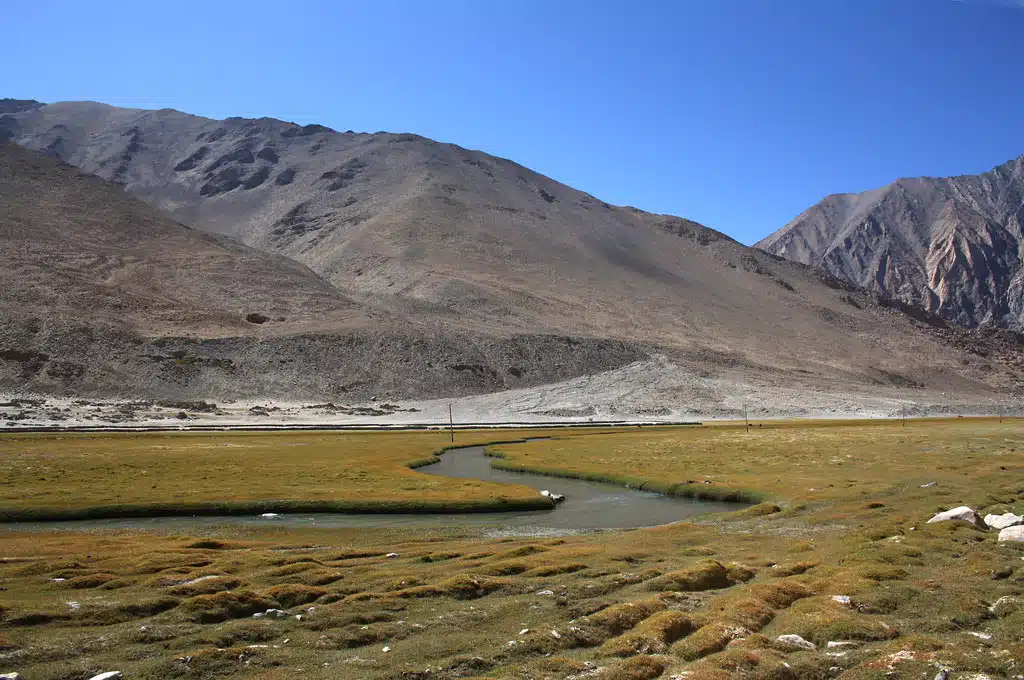
Drass holds the record as the second coldest inhabited place on Earth. Winter temperatures drop to -45°C. The town exists because the Srinagar-Leh highway passes through it and the strategic position is essential, this is where the 1999 Kargil War was fought.
Tiger Hill, Tololing, Point 4875, the names from news coverage of the conflict are the ridgelines visible from Drass. Indian soldiers recaptured these peaks from Pakistani forces over 60 days in summer 1999. The Kargil War Memorial at Drass, 5 km from the main town, lists the names of soldiers who died in that operation. It’s maintained and dignified. It deserves more than a quick stop.
The valley itself is greener and more agricultural than the Ladakh plateau. The Brokpa community (distinct ethnically from mainstream Ladakhis) lives in surrounding villages. Their traditional dress and customs are worth exploring if you have time beyond the memorial.
- Most visitors see Drass en route between Leh and Kargil or Srinagar, it’s the natural overnight stop on that journey.
- The Kargil War Memorial is the main reason to stop. Budget 1-1.5 hours, not 15 minutes.
- Drass is en route to Srinagar on NH1, factor it into any Ladakh-to-Kashmir overland itinerary.
10. Shey Monastery
- Location: Shey Village
- Distance from Leh: 15 km
- Best Time: May to September
- Entry Fee: ₹20 (Indians), ₹50 (foreigners)
- Timings: 8 AM to 7 PM
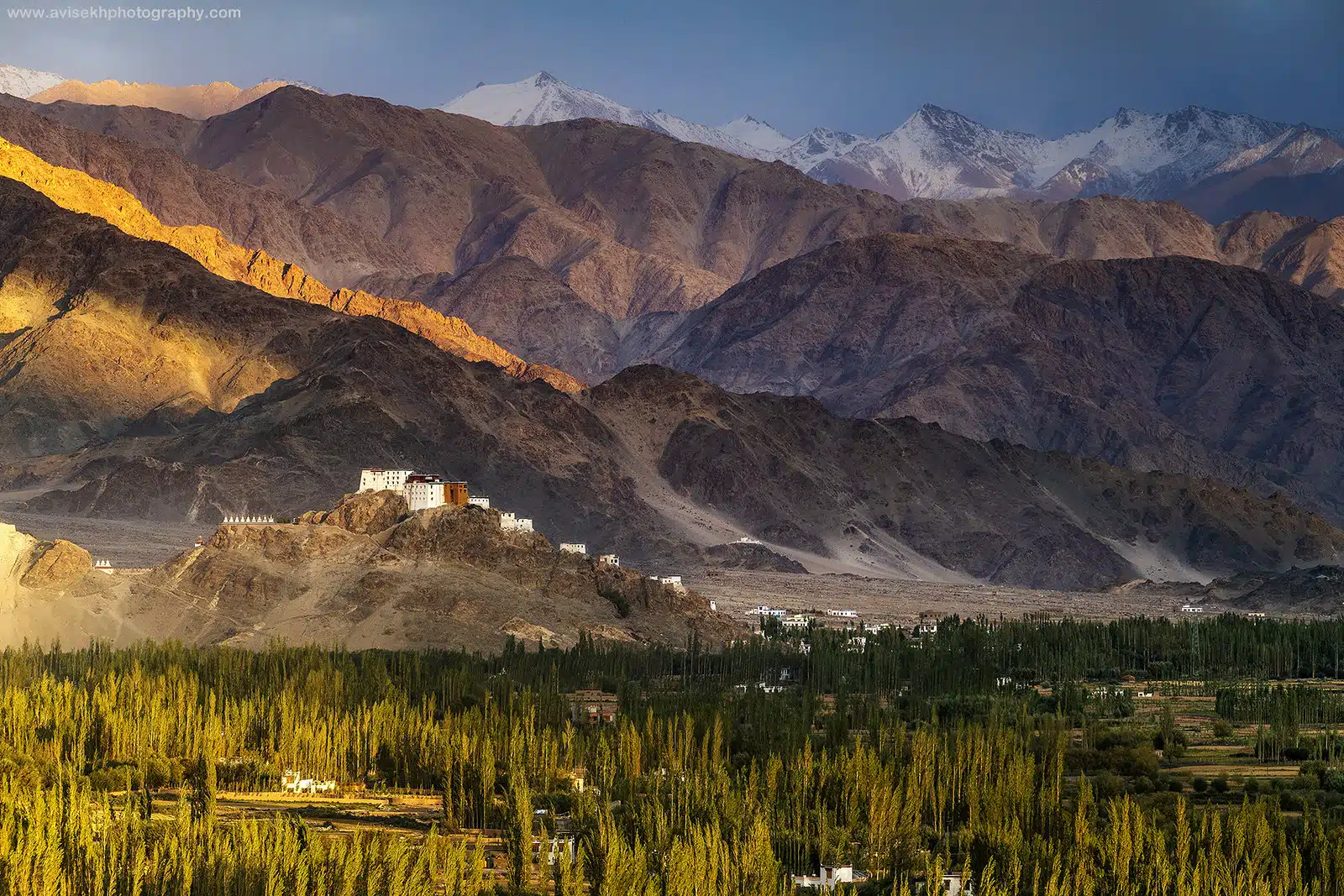
Shey was the summer capital of Ladakh before Leh. The monastery and adjacent palace were built in the 17th century by King Deldan Namgyal. The outer palace walls are now crumbling, the surrounding village largely abandoned. What survives is the monastery and its main draw: a 40-foot copper-gilded statue of Shakyamuni Buddha completed in 1655, one of the largest in Ladakh.
The statue sits inside a three-storey building purpose-built around it. The craftsmanship is detailed, the face, hand positions, and ornamental throne are in Tibetan Buddhist canonical style. The library inside has old manuscripts. The wall paintings date to the 17th century. You can explore the entire complex in about an hour.
The Shey Doo-Lhoo Festival is the most important event here, celebrated annually over three days with exact dates set by the lunar calendar.
- Combine Shey and Thiksey (19 km from Leh) in a single half-day circuit, they’re on the same road and complement each other well.
- The 40-foot Shakyamuni Buddha is the specific thing to see here, the scale inside the three-storey chamber is impressive.
- The entry fee is one of the few paid entries on this list, ₹20 for Indians is nominal.
11. Hanle
- Location: Changthang region, eastern Ladakh
- Distance from Leh: 250 km
- Best Time: May to October
- Entry Fee: Free
- Timings: 8 AM to 6 PM
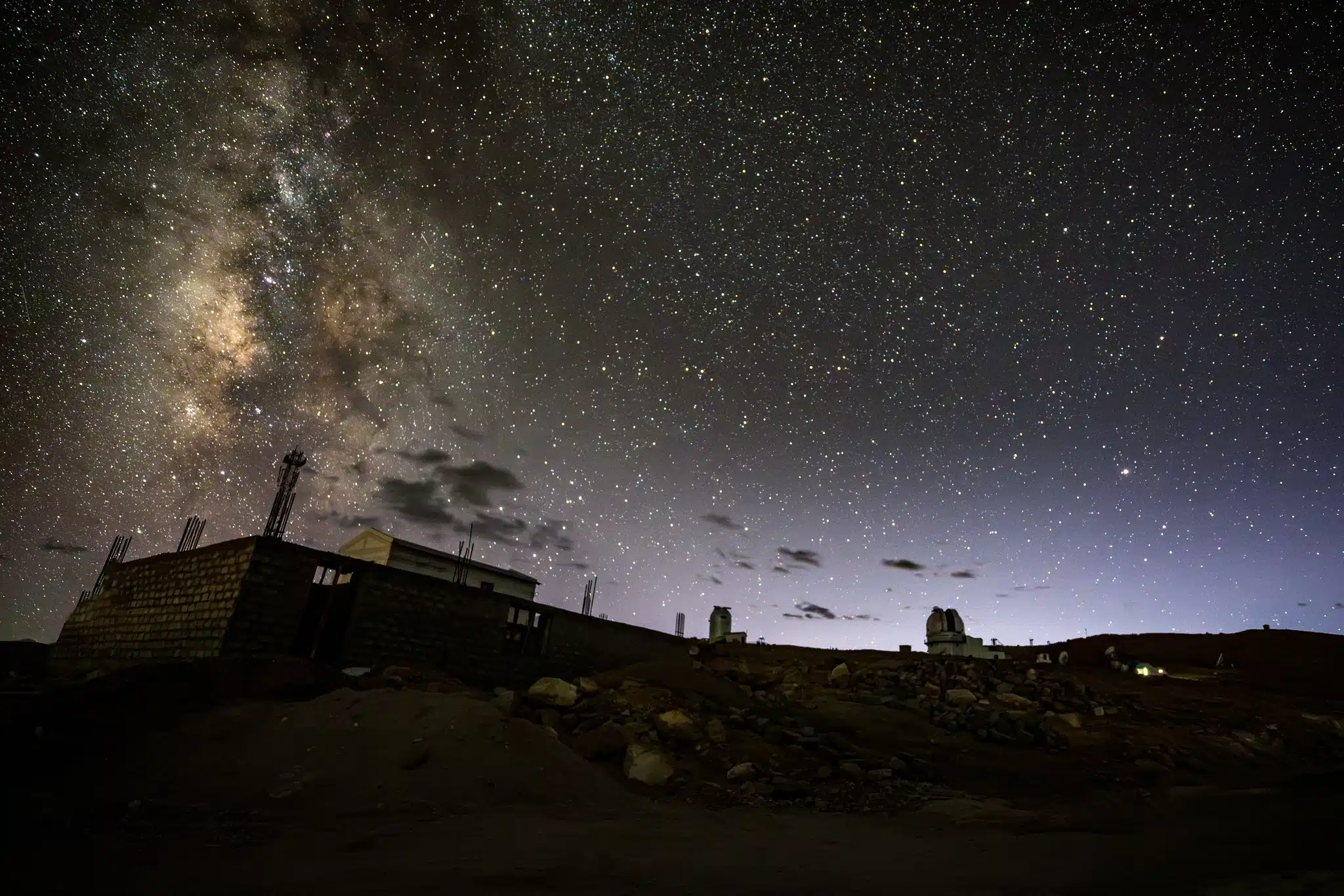
Hanle has two things most places in India don’t: a monastery standing for over 1,000 years and the darkest skies on the subcontinent.
The Indian Astronomical Observatory at Hanle sits at 14,764 feet. At this altitude, the atmosphere is thin, moisture is near zero, and roughly 270 days a year have clear skies. The observatory operates one of the highest-altitude optical telescopes in the world. In 2021, the government declared Hanle and surroundings India’s first Dark Sky Reserve, a protected zone where light pollution is regulated. Nighttime in Hanle is extraordinary. The Milky Way is visible to the naked eye. Astrophotography with the monastery or Tso Moriri in the foreground is a specific draw for photographers.
The Hanle Monastery (11th century) sits on a hilltop overlooking the Hanle River. A resident community of monks maintains it. The murals inside date to the founding. The village population is about 1,000. The closest ATM is in Leh.
- ILP required for Hanle process in Leh before departing.
- Night sky photography – arrive by evening, set up before dark. The Milky Way arc is visible from approximately 10 PM to 3 AM in summer.
- Hanle is 7-8 hours from Leh most people combine it with Tso Moriri (2 nights) and Tso Kar (stopover) on a 4-5 day circuit.
12. Suru Valley
- Location: Western Ladakh, accessible via NH
- Distance from Leh: 230 km
- Best Time: May to October
- Entry Fee: Free
- Timings: 6 AM to 6 PM
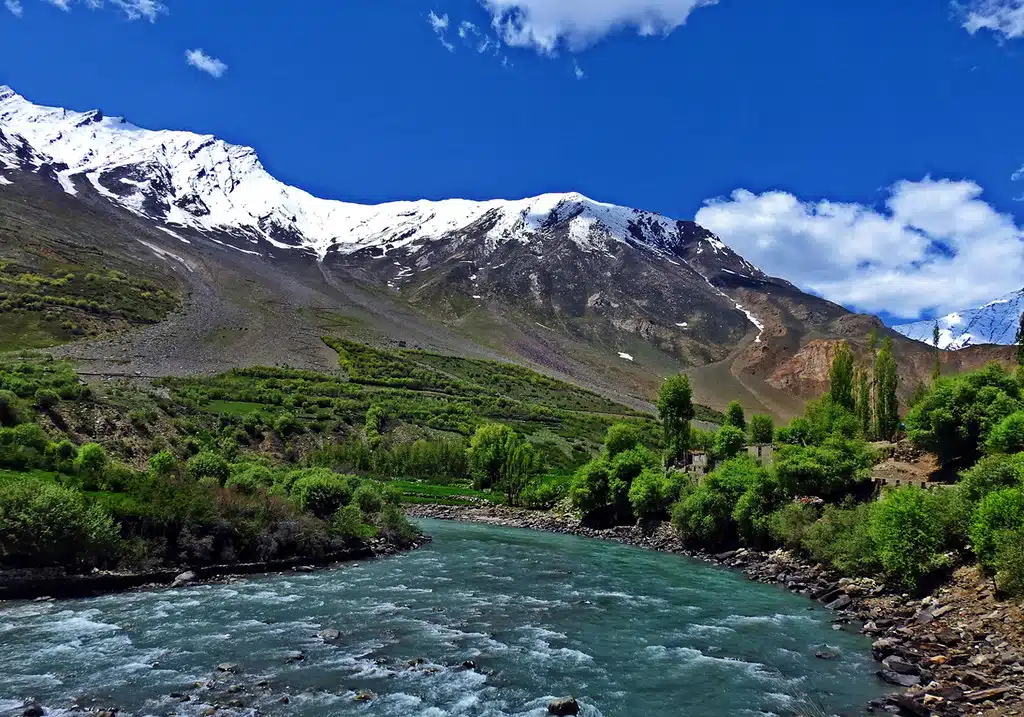
The Suru Valley runs between Kargil and the Zanskar Range. The Suru River flows through it before joining the Indus. The valley is green and terraced compared to the Ladakh plateau, rice fields, wheat terraces, and poplar trees. Temperature is warmer than Leh.
The defining visual is the twin peaks Nun (7,135 m) and Kun (7,077 m), the highest in the Ladakh range, visible from most of the valley on clear days. They look close. The approach from the valley is unusually intimate for peaks of that height.
The Panzella-Suru Trek connects Suru Valley to Zanskar via Pensi La, the main trekking approach to Padum from the Kargil side. Monasteries include Wanla (near the Suru-Kargil junction) and Rangdum Monastery (isolated on a flat plain between mountain ranges, 130 km from Padum). Rangdum’s positioning, a monastery on a hill surrounded by open grazing plateau, is unlike anything else in Ladakh.
- Suru Valley is the approach route to Zanskar from Kargil, most people see it en route.
- Nun-Kun peaks are best visible in early morning before haze builds, plan accordingly.
- Rangdum Monastery is worth an overnight stop if doing Kargil-Padum – it breaks the long drive and the setting is dramatic.
13. Aryan Valley
- Location: Kargil district, northwestern Ladakh
- Distance from Leh: 160 km
- Best Time: May to September
- Entry Fee: Free
- Timings: 9 AM to 7 PM
Aryan Valley (also called Dha-Hanu) is home to the Brokpa, a small community who identify as descendants of soldiers from Alexander the Great’s army. The historical claim is disputed by scholars, but the cultural distinctiveness is undeniable. Brokpa dress is immediately different from other Ladakhis: elaborate headdresses decorated with flowers, ibex horns, and turquoise; woolen robes in specific colors and patterns.
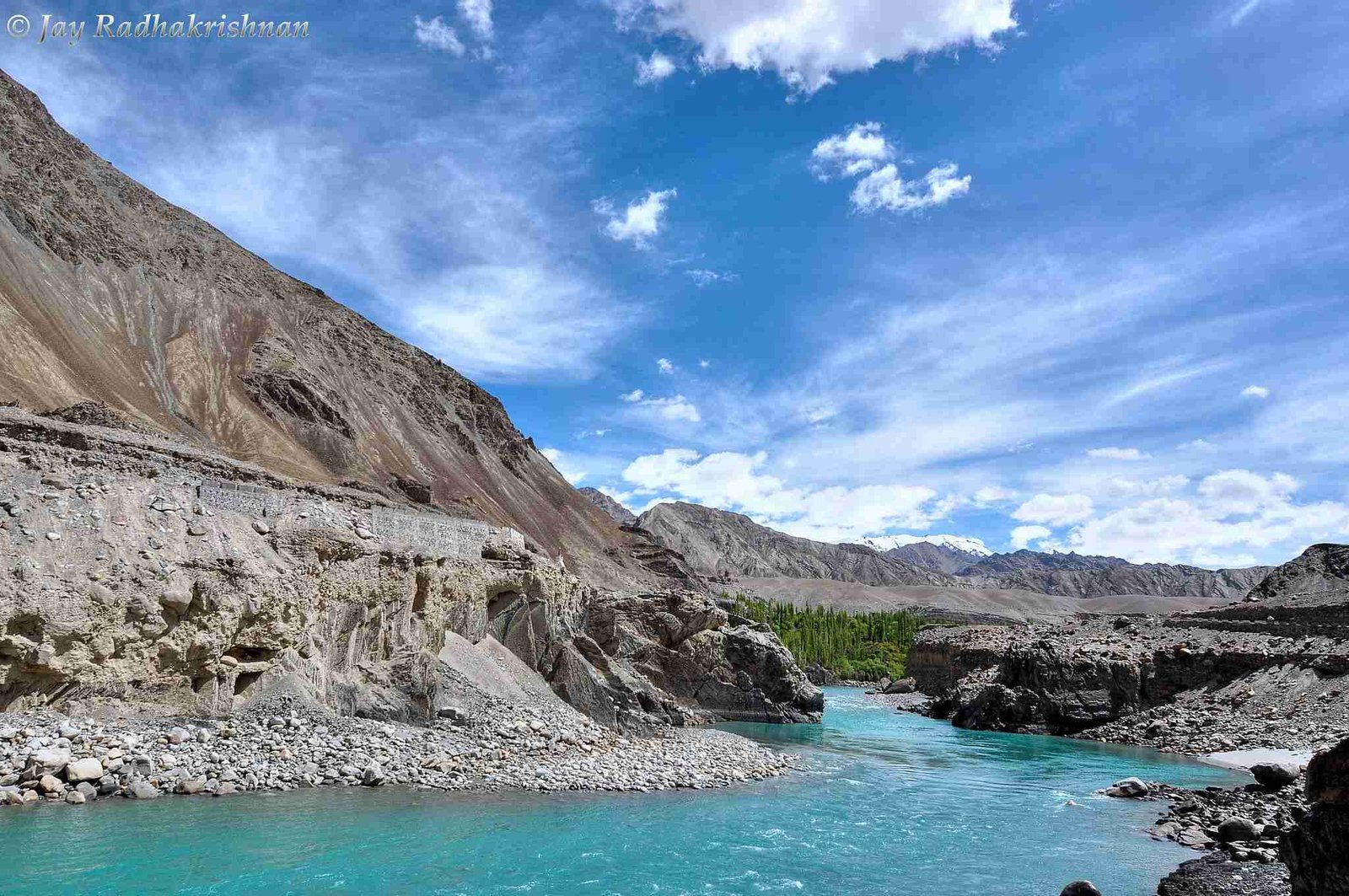
The valley sits in a deep gorge of the Indus River at lower altitude than Leh, warmer, more vegetated, with apricot orchards, grape vines, and mulberry trees. Five or six Brokpa villages (Dha, Hanu, Beama, Garkon, Darchik) make up the valley, each with its own character.
The people are hospitable and curious about visitors, particularly those who take genuine interest in their customs and history rather than treating them as photographic subjects.
- ILP required for Indian nationals; PAP required for foreign nationals, apply in advance.
- The road from Leh goes via Khalsi and descends into the Indus gorge, the drive is scenic.
- Spend at least half a day in a village – drive-by visits miss the point of Aryan Valley.
14. Siachen Border
- cation: Karakoram Range, northern Ladakh
- Distance: Visible from Turtuk (380+ km from Leh)
- Best Time: June to September
- Entry Fee: Not applicable (restricted zone)
Siachen Glacier is the highest battlefield in the world at 20,000 feet. It has been contested between India and Pakistan since 1984. Both armies maintain permanent positions year-round in conditions that drop to -60°C with wind chill. Soldiers rotate every few months. The glacier has its own strategic logic, whoever controls the high ground controls visibility into both countries.
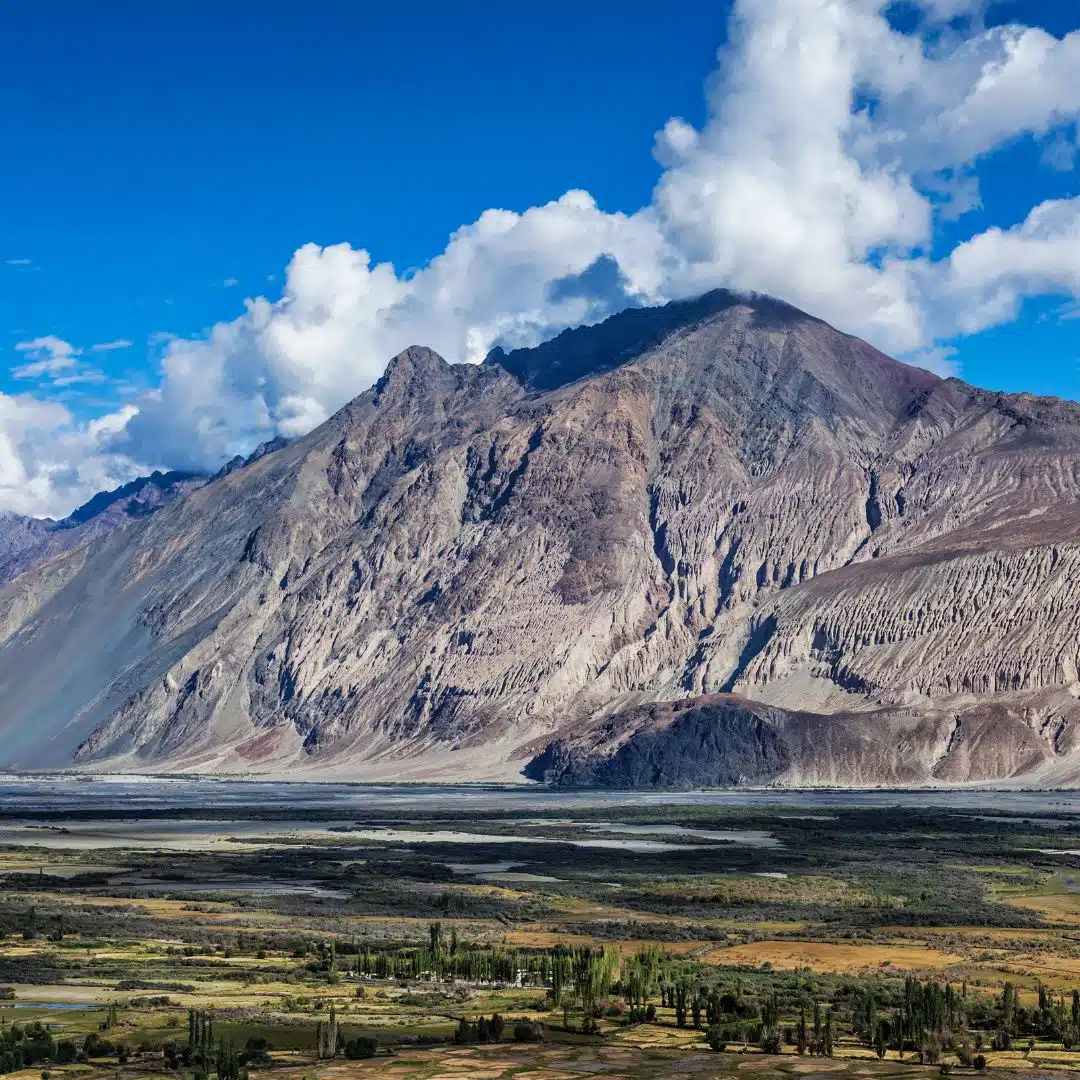
Civilians cannot visit the glacier. The Indian Army controls access completely. What tourists can see: from Turtuk village, you can see the Karakoram Range where Siachen sits. The full context of this border, what it costs in human terms, is best understood at the Kargil War Memorial at Drass and through conversations in Turtuk with locals who remember 1971.
Army base camp visits to Siachen require expedition-level permitting through registered operators
- The closest civilian viewpoint to Siachen is from upper Turtuk village. Army personnel there can point out the glacier area on clear days.
- Kargil War Memorial at Drass provides the clearest context for what this border region has meant historically.
- Siachen’s significance is contextual, not visual, understand the history before going.
15. Puga Valley
- Location: Changthang region, southeastern Ladakh
- Distance from Leh: 176 km
- Best Time: April to September
- Entry Fee: Free
- Timings: 8 AM to 6 PM
Puga Valley is one of India’s most significant geothermal sites. Hot springs, sulphur vents, and mud pools mark the valley floor at 14,500 feet. The springs release visible steam. The sulphur smell reaches you before you see the vents. The geothermal activity here has been studied since the 1970s as a potential renewable energy source for Ladakh’s remote communities.
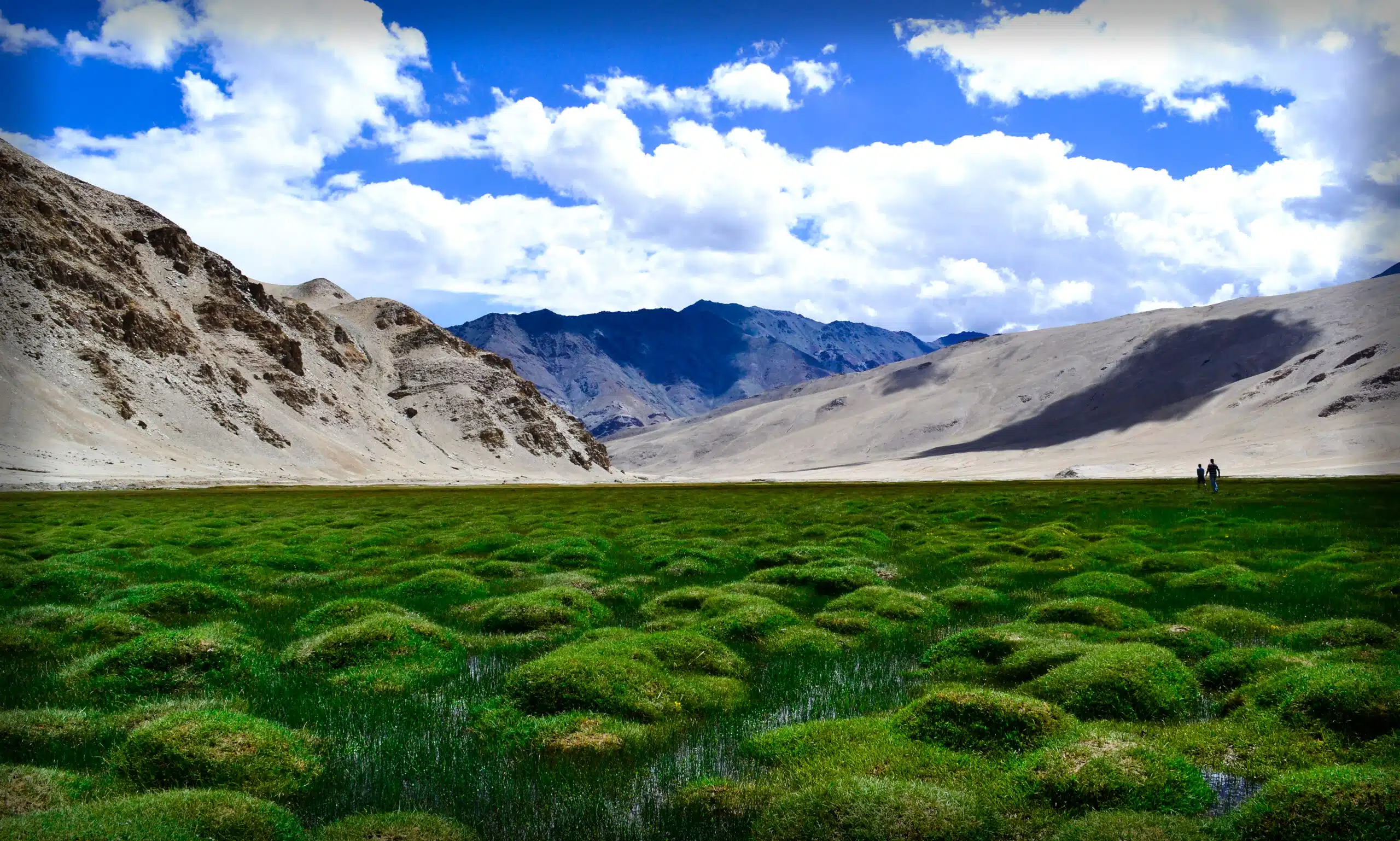
The hot springs are believed to have medicinal properties, hot sulphur water historically used by local herders for skin conditions and joint pain. The mineral deposits around the vents are bright yellow and orange, contrasting with the brown Changthang Plateau stretching in all directions.
Puga sits on the Leh-Tso Moriri road, most people stop here en route rather than making it a primary destination. 45-60 minutes is the right amount of time. The hot springs are accessible directly from the road on foot.
- Puga is a natural stopover on the Leh to Tso Moriri road – build it into that circuit rather than treating it as a separate trip.
- No facilities at the valley, carry water and food from Leh or Chumathang.
- The mud pools and sulphur vents are the specific things to see. Walk around the
16. Thiksey Monastery

- Location: Thiksey village, Indus Valley
- Distance from Leh: 19 km
- Best Time: May to September
- Entry Fee: ₹50 (Indians), ₹100 (foreigners)
- Timings: 6 AM to 9 PM
Thiksey is the most visually dramatic monastery near Leh. Twelve storeys of white-washed buildings rise in tiers on a hilltop above the Indus Valley. The complex is often compared to the Potala Palace in Lhasa, same tiered architecture, same hillside positioning, similar scale. It was founded in the 15th century and houses around 60 monks.
The main attraction inside is the Maitreya Temple, built in 1980 on the instructions of the 14th Dalai Lama. The Maitreya Buddha statue inside is 49 feet tall, spanning two storeys. The gold detailing and proportions are precise Tibetan Buddhist craftsmanship. The main assembly hall below has older thangkas and murals dating to the monastery’s founding.
The morning puja at 6 AM is one of the better things to do in Ladakh. Monks in maroon robes, low chanting, incense, butter lamps in the half-light. Arrive before 6. Stay for the full ceremony (about 45 minutes). Then walk the monastery grounds when the light comes up.
- The morning puja at 6 AM is the main reason to come early – not just for photography but for the atmosphere.
- Combine with Shey Monastery (15 km from Leh) – they’re on the same road and work as a half-day circuit.
- The rooftop view from Thiksey over the Indus Valley, with Stok Kangri visible in the distance, is one of the best monastery views in Ladakh.
17. Hemis Monastery
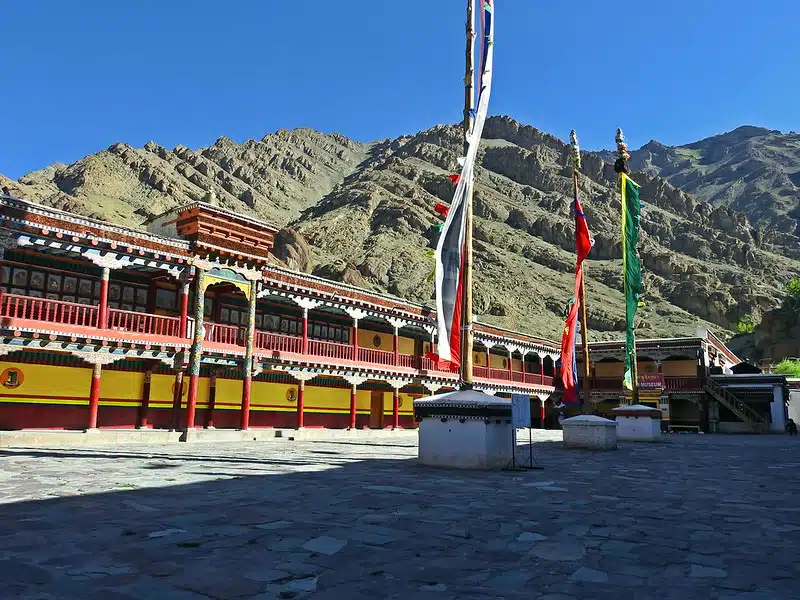
- Location: Hemis, 45 km from Leh
- Distance from Leh: 45 km
- Best Time: Year-round (festival in June-July)
- Entry Fee: ₹100 (Indians), ₹300 (foreigners)
- Timings: 8 AM to 6 PM
Hemis is the largest and wealthiest monastery in Ladakh. Founded in 1672 by the Buddhist saint Stagtsang Raspa, it houses around 150 monks and maintains extensive landholdings across the Hemis region. The monastery walls are thick and the courtyard is large, built for permanence and large gatherings, not just daily use.
The main draw is the Hemis Festival, held annually in June or July (date shifts with the Tibetan lunar calendar). Two days of Cham Dance, monks in elaborately painted masks and brocade costumes performing ritual dances in the courtyard, accompanied by cymbals, drums, and long horns. The festival marks the birth anniversary of Padmasambhava, the 8th-century saint who brought Vajrayana Buddhism to Tibet. It draws thousands of visitors. If your dates align, plan around it.
The museum inside Hemis houses thangkas, ancient manuscripts, silverware, and religious artifacts, one of the better monastery museums in Ladakh. The monastery also sits inside Hemis National Park, home to the highest density of snow leopards in the world (best spotted in winter, December to February).
- Check the exact Hemis Festival date for the current year before planning – it changes annually with the lunar calendar.
- Book accommodation in Leh well in advance if your visit overlaps with the festival, rooms fill up weeks ahead.
- Hemis National Park around the monastery is the best place in India for snow leopard sightings, winter trips specifically for this are a growing category.
18. Lamayuru Monastery
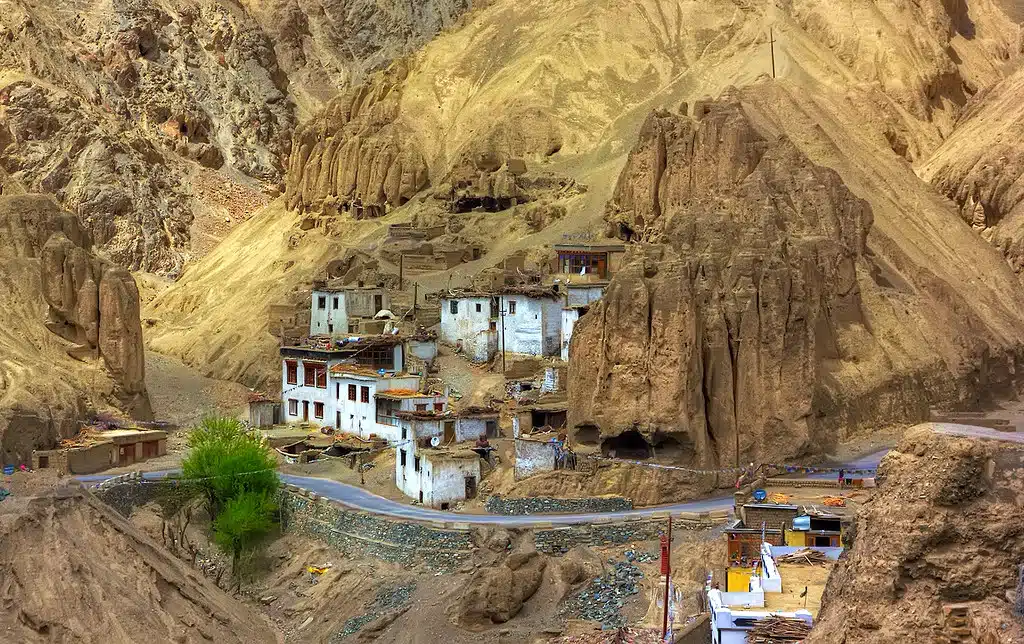
- Location: Lamayuru village, Kargil district
- Distance from Leh: 125 km on NH1
- Best Time: May to October
- Entry Fee: ₹50
- Timings: 8 AM to 6 PM
Lamayuru is one of the oldest monasteries in Ladakh. Parts of the complex date to the 11th century, making it roughly contemporary with Alchi. It houses around 150 monks and is one of the largest monastic communities in Ladakh. The monastery sits above a village of the same name, visible from the highway for several kilometers before you reach it.
The surrounding landscape is called Moonland locally, eroded clay and sand formations that look like a lunar surface. Pale, rounded mounds with the monastery rising dramatically behind them. It’s one of the most photographed spots on the Srinagar-Leh highway.
The Yuru Kabgyat Festival at Lamayuru (June or July, date varies) features Cham Dance performances similar to Hemis but with smaller crowds. A secondary festival, Phesto, runs in winter.
- Lamayuru is on the Srinagar-Leh highway – if driving from Srinagar to Leh or vice versa, build in a 1-2 hour stop here.
- The Moonland landscape is best photographed from the road before you enter the village, distance gives you the full scale of the monastery against the formations.
- The monastery’s 11th-century prayer hall contains some of the oldest murals in Ladakh’s western region.
19. Alchi Monastery
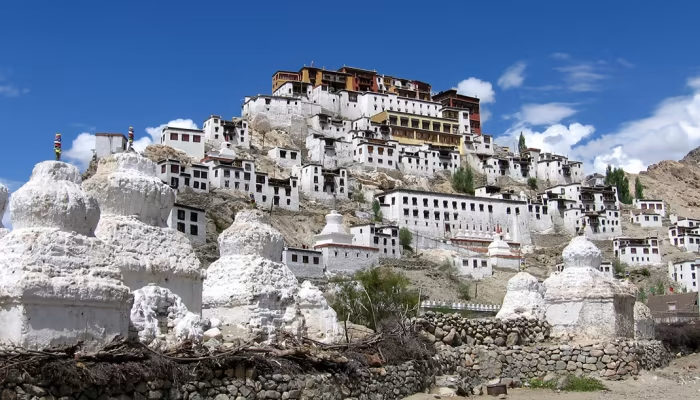
- Location: Alchi village, Indus riverbank
- Distance from Leh: 70 km
- Best Time: May to October
- Entry Fee: ₹50 (Indians), ₹100 (foreigners)
- Timings: 8 AM to 1 PM, 2 PM to 6 PM
Alchi is the oldest surviving monastery in Ladakh, founded in the 11th century by Rinchen Zangpo, the Great Translator who brought Tibetan Buddhism to this region. He built 108 monasteries across Ladakh, Kashmir, and Spiti. Alchi is the most important that survives.
Unlike every other monastery on this list, Alchi is not built on a hilltop. It sits at valley level on the bank of the Indus River, surrounded by agricultural land and poplar trees. The original decision to build at river level (rather than on a defensible high position) reflects a moment of relative peace in 11th-century Ladakh.
The murals inside are 1,000 years old and represent the Kashmiri style of Buddhist art, different from the Tibetan style that came later. They have survived because the monastery was too remote for armies and iconoclasts to reach. The colors are still vivid. The figures are still detailed. Seeing paintings from 1000 AD in this condition is unusual anywhere in the world.
- The 1,000-year-old murals are why you come to Alchi. Take time with them rather than rushing through for photographs.
- Alchi is on the Srinagar-Leh highway, combine with a Sham Valley day circuit (Likir, Basgo, Gurudwara Pathar Sahib, Magnetic Hill) for a full day from Leh.
- Photography inside the main temples may be restricted, ask the resident monk before shooting.
20. Magnetic Hill and Sangam
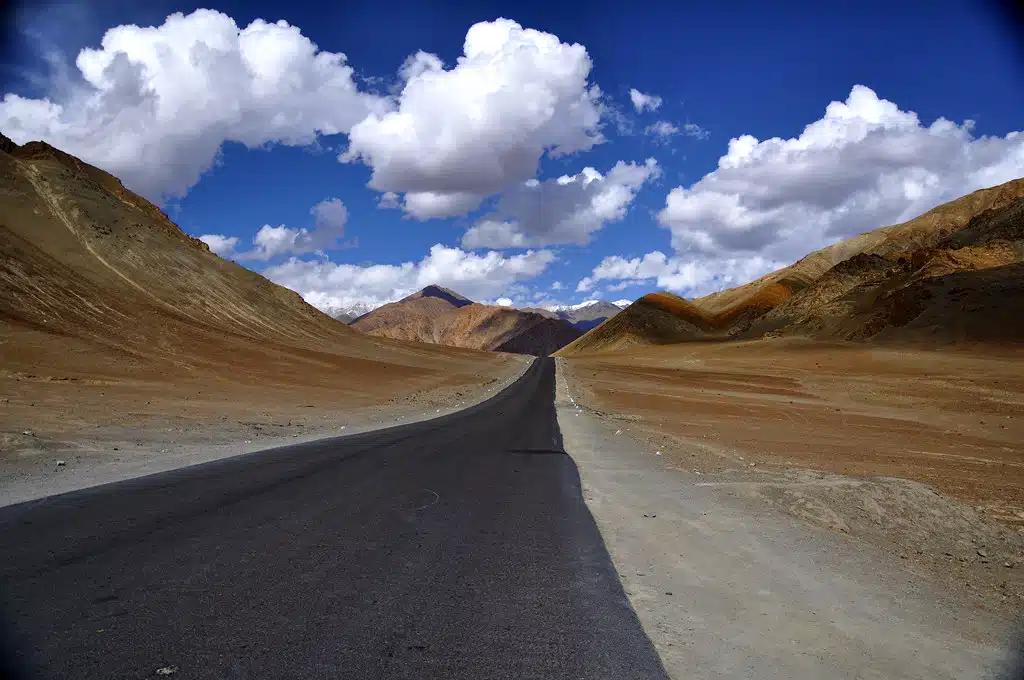
- Location: NH1 (Srinagar-Leh Highway), near Nimmu
- Distance from Leh: 30 km
- Best Time: Year-round
- Entry Fee: Free
- Timings: Always accessible
Two places on the same stretch of road, both worth a stop, combined in one entry because neither justifies a dedicated trip but both are worth 20-30 minutes each.
Magnetic Hill is a spot on the Leh-Srinagar highway where a vehicle parked on what appears to be a slight uphill slope will roll forward when taken out of gear. It’s an optical illusion; the surrounding terrain creates a false visual horizon that makes a downhill slope look uphill. You can test it in your own vehicle. It takes 10 minutes. The roadside sign is now the most photographed thing at Magnetic Hill.
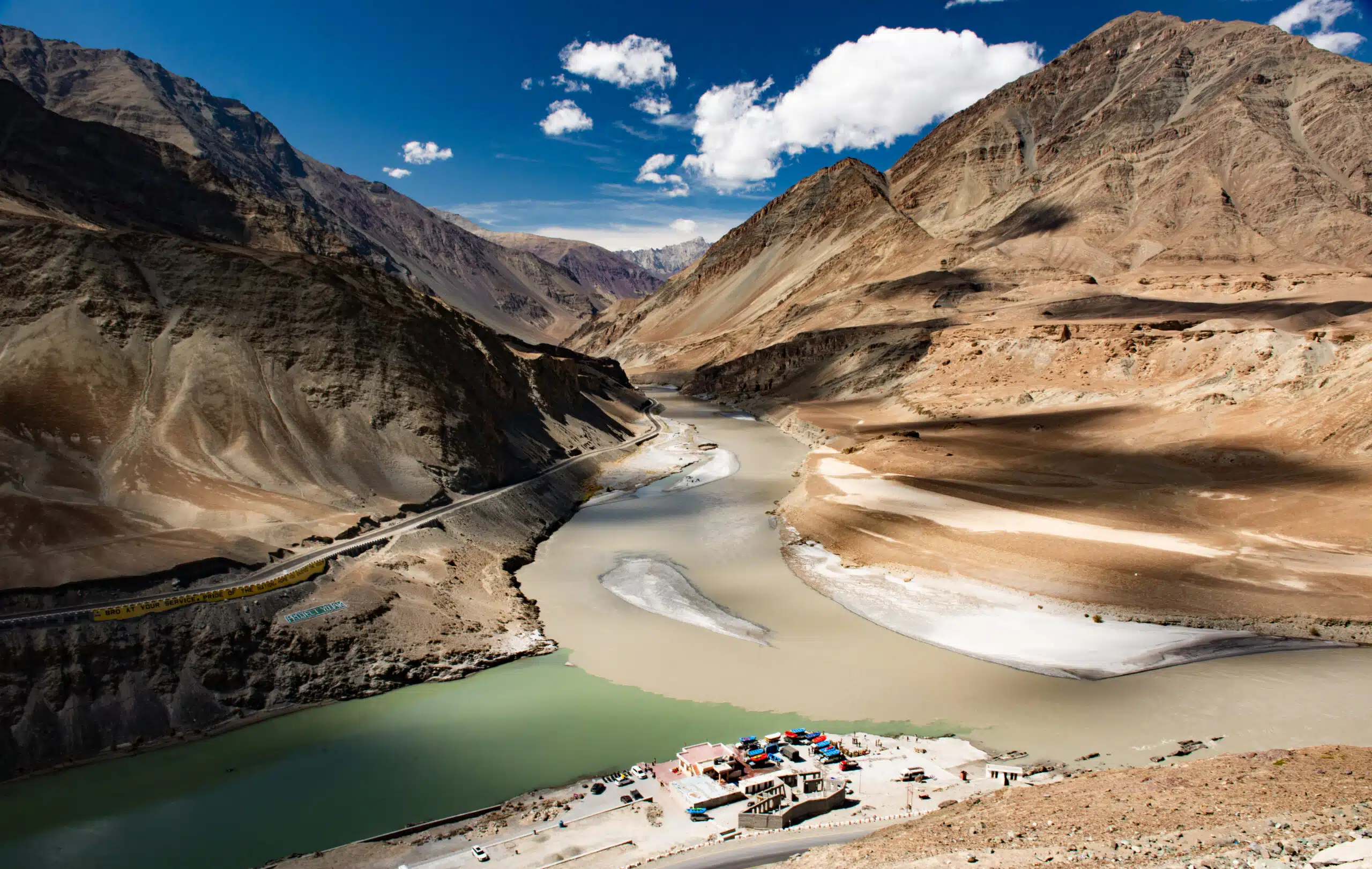
Sangam is where the Zanskar River meets the Indus River. Two rivers, two colors, the darker, murkier Zanskar and the clearer, greener Indus, flowing side by side before mixing. The confluence is visible from the road. Walk down to the riverbank and stand between the two streams. It’s a peculiarity of geology that the rivers maintain distinct colors for a distance after meeting.
- Both are easy additions to any Sham Valley circuit from Leh, no detour required, they’re on the main highway.
- Sangam is more visually interesting than Magnetic Hill, the two-color river is genuinely unusual.
- Gurudwara Pathar Sahib (25 km from Leh) and Hall of Fame (4 km from Leh) are natural additions to this route – all four can be done in a single half-day.
Get in touch
Zanskar Valley Long Tours

11D/10N

14D/13N
10D/9N
11D/10N
FAQ's
Which is the most visited place in Leh Ladakh?
Pangong Lake and Nubra Valley are the most visited. Pangong gained mainstream attention after appearing in “3 Idiots” (2009) and is now the defining Ladakh experience for most tourists. Among monasteries, Hemis and Thiksey see the highest footfall. Among Leh city attractions, Shanti Stupa and Leh Palace.
Are 4 days enough for Ladakh trip?
Only barely. Day 1-2 must be acclimatization in Leh, skipping this risks altitude sickness that ruins the rest of the trip. Day 3 Nubra Valley. Day 4 return. That leaves no time for Pangong, Tso Moriri, or monasteries beyond Leh. For Nubra and Pangong both, plan 7 days minimum.
Which things is famous in Leh Ladakh?
Ladakh is famous for three things above all: high-altitude mountain passes (Khardung La, Chang La), alpine lakes (Pangong Tso, Tso Moriri), and Tibetan Buddhist monasteries (Hemis, Thiksey, Alchi, Lamayuru). The Ladakhi food, momo, thukpa, paba, baley, and gur gur cha (butter tea) is a specific draw for food travelers.
Which month is best for visiting leh ladakh?
September is the best month overall – post-peak crowds, both highways still open, all attractions accessible, lower prices than July-August, and the landscape at its most colorful as autumn begins. June is the best month for first-time visitors, peak infrastructure, comfortable temperatures, everything fully running.
Is ladakh cheap to visit?
Budget travel is possible. Guesthouses in Leh from ₹1,000-2,500 per night. Local dhabas serve thukpa and dal rice for ₹100-200. The main costs are private transport (required for Nubra, Pangong, Tso Moriri – ₹4,000-13,000 per route for a private SUV) and Inner Line Permits (₹400 per place). A budget traveler can manage ₹3,000-4,000 per day. Mid-range is ₹6,000-8,000.
What are the off-beat places to visit in leh ladakh?
Turtuk village (last Indian village before Pakistan, opened 2010), Hanle dark sky reserve, Aryan Valley (Brokpa community), Tso Kar Lake, Phugtal Monastery in Zanskar, Puga Valley hot springs, Rangdum Monastery in Suru Valley, and Drang-Drung Glacier viewpoint near Pensi La. These see a fraction of the traffic that Pangong and Nubra receive.
What are the top things to do in Leh Ladakh?
River rafting on the Zanskar River (Padum to Nimmu, 7-10 days, Class III-IV). Multi-day trekking, Markha Valley (6 days), Sham Valley (4 days), Nubra Valley Trek (5 days). Attending Hemis Festival or Thiksey morning puja. Camping at Pangong Tso. Biking the Manali-Leh highway. Night sky photography at Hanle Dark Sky Reserve. Snow Leopard Trek at Hemis National Park in January-February.
Is Ladakh a good destination to visit in January?
For specific purposes only. Both highways are closed. Leh is accessible by air only. Most hotels and restaurants shut. January is for the Chadar Trek (walking 9-10 days on the frozen Zanskar River), the Snow Leopard Trek in Hemis National Park, and the Losar Festival at area monasteries. Not recommended for first-time visitors or general tourism.
How many places can I cover in a 7-day Ladakh trip?
In 7 days: 2 days in Leh (city sightseeing and acclimatization), 2 days in Nubra Valley (Diskit, Hunder, Turtuk as day trip), 2 days at Pangong Tso (drive and overnight camp), 1 day return buffer. That covers the essential circuit. Adding Tso Moriri or Hanle requires 10-12 days.
Read the complete details on: Ladakh 7 days Itinerary
 Call Now
 Chat With Us